Cancelling your registration will remove your access to the event. If you proceed, you will no longer be able to participate or access event-related materials.
Deleting your account will remove your access to the event.
Need Technical Assistance? ✉ tech@vfairs.com
About the event
Event format
This event will be a hybrid of a high-level forum, academic presentation, and spaces for regional collaboration and coordination between thought and action.
I. HIGH-LEVEL PLENARY SESSIONS
Establishment of the political, ethical, and intellectual framework for the meeting with the participation of global leaders from the Club of Rome, academics, scientists, and institutional leaders.
II. THEMATIC PANELS
Presentation of Regeneration Projects and the NEP Argentina and NEP Brazil reports (Earth4All National Engagement Program) by experts, researchers, and industry leaders
III. DIALOGUE BETWEEN THOUGHT AND ACTION
Plenary sessions where doers and thinkers come together, building a bridge between philosophy and action. Curated conversations between philosophers, systems specialists, civil servants, urban planners, and impact entrepreneurs.
IV. REGIONAL COLLABORATION
Spaces for co-designing projects, position papers, and joint regional initiatives.

This conference, organised by Club of Rome and the Romanian Association of the Club of Rome, will explore how humanity can bridge the gap between knowledge and action, reimagine education and learning, and build cultural and material conditions for a just and regenerative future.
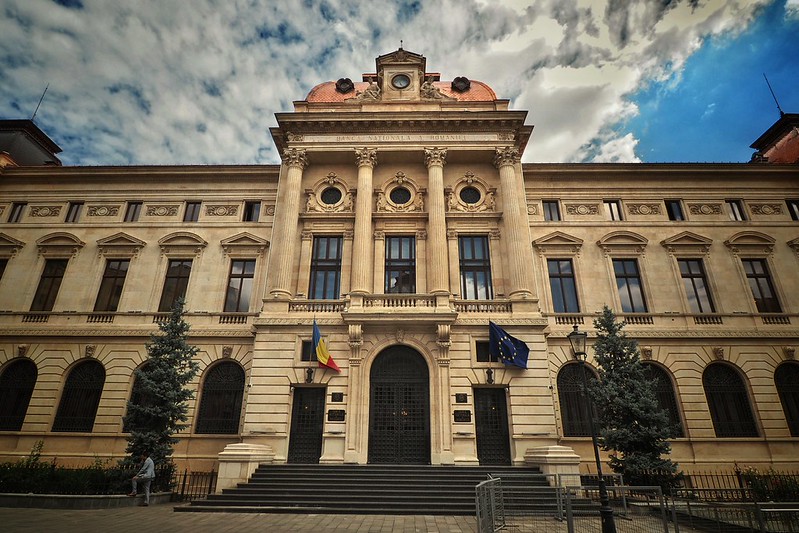
The three-day gathering, hosted by the National Bank of Romania will bring together thinkers from across the world to celebrate the launch of Constellations of Hope and the upcoming centenary of Mircea Maliţa (co-author of No Limits to Learning).
The conference will offer space for dialogue and debate both in person in Bucharest and online.
The event will be a hybrid of a high-level forum, academic presentation, and spaces for regional collaboration and coordination between thought and action.
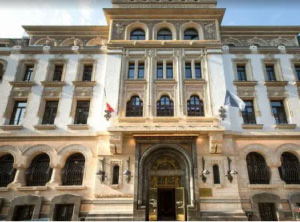
Use the main entrance of the National Bank of Romania, loca...
Use the main entrance of the National Bank of Romania,
located at 8 Doamnei Street, Bucharest, Romania.
https://maps.app.goo.gl/QK4mRfhz7gvpyTXQ6
You will need to produce a valid ID for entry. See FAQs
Opening address by Mugur Isarescu Governor of the National B...
Opening address by Mugur Isarescu Governor of the National Bank of Romania. Welcome by Paul Shrivastava co president and special address by Silvia Zimmermann co president of The Club of Rome.
Carlos Alvarez Pereira
Secretary General, The Club of Rome
Secretary General, The Club of Rome
Carlos Alvarez Pereira is a senior professional combining more than 30 years of experience in research and innovation, entrepreneurship, and business management, with a passion for complexity thinking and transdisciplinarity. He is keen on exploring the cultural transformation required to cross the threshold towards equitable human wellbeing within a healthy biosphere. Carlos is the Secretary General at the Club of Rome International.
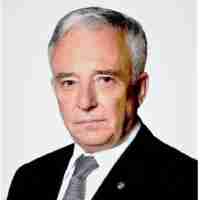
Mugur Isărescu
Governor, National Bank of Romania
Governor, National Bank of Romania
Mugur Isărescu has been Governor of the National Bank of Romania since 1990, and was also Prime Minister of Romania (1999–2000) and Director of the Institute of World Economy. A graduate of the Faculty of Commerce (1971), he holds a Ph.D. in Economics from the Bucharest Academy of Economic Studies and has been a member of the Romanian Academy since 2006, authoring or coordinating over 60 books and research papers. Named “Central Banker of the Year” by The Banker in 2001, he has received numerous honours, including the Légion d’Honneur and the National Order “The Star of Romania”.
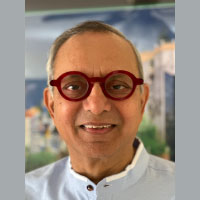
Paul Shrivastava
Co President, Club of Rome
Co President, Club of Rome
Paul Shrivastava is Co-President of The Club of Rome and a visionary leader in management and sustainability. A Professor of Management and Organisations, he previously served as Chief Sustainability Officer at The Pennsylvania State University and Executive Director of Future Earth. He held the David O’Brien Professorship at Concordia University, Montreal, and founded the UNESCO Chair for Arts and Sustainable Enterprise at ICN Business School, France. He founded several companies and non-profits, and the ONE Division of the Academy of Management. He holds a Ph.D. from the University of Pittsburgh and has published 17 books and over 100 articles.
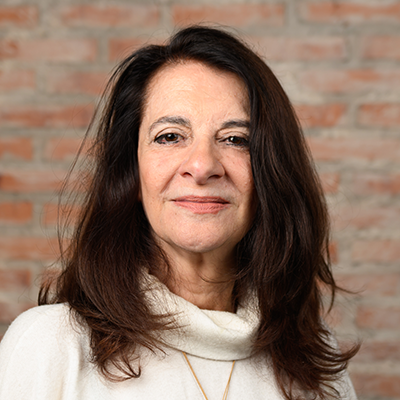
Silvia Zimmermann
Co President, The Club of Rome
Co President, The Club of Rome
Argentinean writer, philosopher and international lecturer. A disciple and collaborator of Jorge Luis Borges, she studied Anglo-Saxon and Icelandic literature with him, Anthropology at La Sorbonne, and Philosophy at the University of Buenos Aires. She is a columnist for La Nación, co-directed the Vatican’s 2017 Watershed Conference on Water, and coordinated “Dialogues in Paradise” in Japan. She is International Director of the Mokichi Okada Chair on Beauty, University of Bologna, and founder and President of the Argentinean Chapter of the Club of Rome and a member of its International Executive Committee. Author of Manuel y la lluvia, La Dimensión de
lo Imposible, Grupo Editor Latinoamericano, Buenos Aires,1992
La otra orilla. Ediciones Agón, Buenos Aires, 1992
This session draws on Constellations of Hope, a global colle...
This session draws on Constellations of Hope, a global collection of case studies, pedagogical innovations, and theoretical reflections from educators, researchers, and practitioners working at the frontiers of transformative learning. The volume was built around a central question that this session brings into open conversation: what does it mean to reimagine education at a moment when the world it was designed to serve no longer exists? Bringing together thinkers, practitioners, and learners from across disciplines and geographies, the session explores what learning looks like when it is oriented toward regeneration rather than reproduction, toward relationship rather than extraction, and toward the cultivation of hope as a serious, structural, and deeply human practice. The conversation draws on a wide range of traditions and lived experiences to ask what education must become if it is to help humanity navigate the profound civilisational transition already underway. The aim is generous and open: to think together, across difference, about what learning for a regenerative world requires of us.
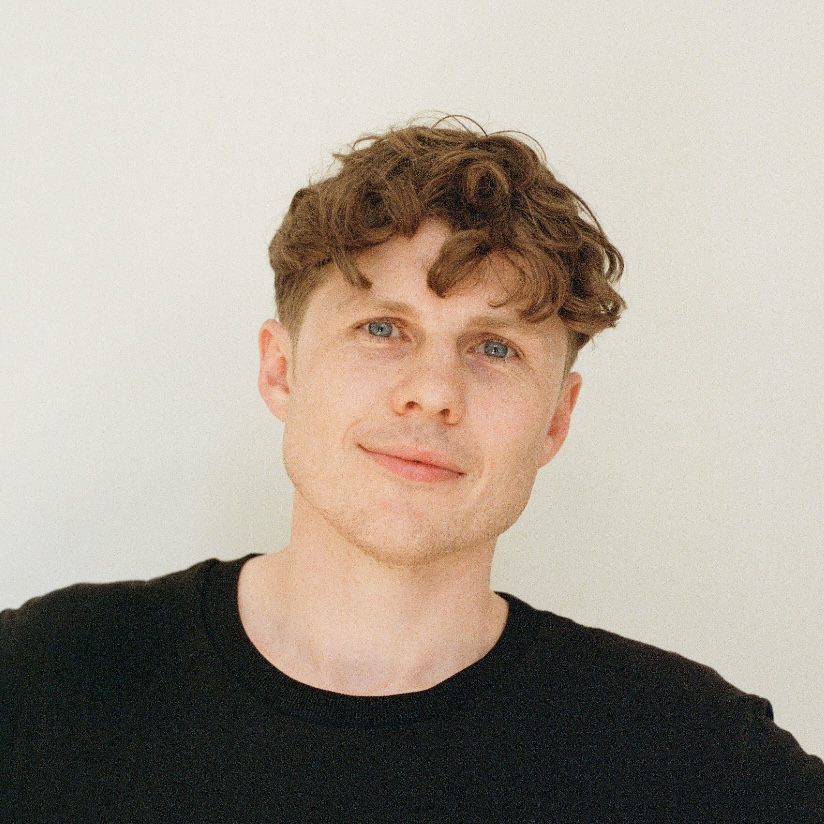
Jack Davies
Founder / Creative Campaigner, Making Movements / Project Everyone
Founder / Creative Campaigner, Making Movements / Project Everyone
Jack is a creative campaigner working at the intersection of education, democracy and culture. For the last 5 years he has stewarded the World's Largest Lesson in partnership with UNICEF and UNESCO, reaching millions of children worldwide. At Project Everyone he is part of the team that helped launch the United Nations Sustainable Development Goals. As a DJ, musician and Founder of Making Movements, he is passionate about harnessing the power of culture and creativity for impact. His work is increasingly focused on civic engagement and democratic system change, in response to the institutional crises we are facing worldwide.
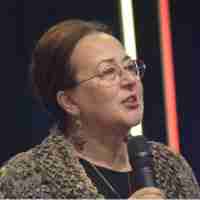
Madlen Șerban
Associated professor, University of Bucharest
Associated professor, University of Bucharest
Madlen Șerban is an associate professor at the Faculty of Psychology and Educational Sciences, University of Bucharest, and a member of the Romanian American Fulbright Commission. For the past four years she served as Secretary General of the Romanian National Commission for UNESCO. From 2009 to 2017 she was Director of the European Training Foundation (ETF), appointed by the President of the European Commission. She also (co-)chaired the Human Capital Development Task Force under the Stability Pact for South Eastern Europe, and has worked with UNESCO, the OECD, the World Bank and Cedefop.
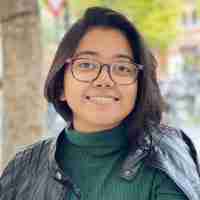
Raad Sharar
Moderator
Programme Lead, The Club of Rome
Programme Lead, The Club of Rome
Raad has a development sector background, advancing sustainability and social justice through research, programme coordination and cross-cultural engagement. She holds a BA in Economics from BRAC University and two Master’s degrees from KU Leuven in Social and Cultural Anthropology and Development Studies.

Samia Dumbuya
Founder, The People's Ark
Founder, The People's Ark
Samia Dumbuya is a British-Sierra Leonean climate justice organiser, researcher and educator, and founder of The People’s Ark CIC, a community-led organisation building climate resilience and green skills. She is also a founding member of the Black Ecofeminist Network UK. Her work sits at the intersection of climate justice, community organising, sustainable transitions and collective power, with a focus on creating accessible spaces for communities to shape the futures they want. Samia is an MSc Sustainable Resources student at UCL and has worked across research, advocacy, education and grassroots organising. She is passionate about connecting climate action with joy, imagination,
This panel brings together educators, researchers, and pract...
This panel brings together educators, researchers, and practitioners who are remaking what education looks like from the inside out, across classrooms, communities, and living systems around the globe. The session asks a single animating question: what does it actually take (institutionally, pedagogically, emotionally, and relationally) to move the lines? Drawing on the case studies documented across this volume, the discussion seeks to surface what these diverse experiments share beneath their differences, and how the resonance between them might be amplified into something with genuine systemic reach. The aim is to deepen a collective understanding of what hope looks like when it is grounded in practice.
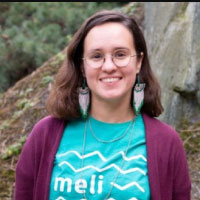
Ana Rosa de Lima
Director, Meli Bees Network
Director, Meli Bees Network
Omágua woman connecting multiple leaders from Indigenous and local communities via Meli, a global Impact Network.

Jacqueline Colmar
Social Innovation Consultant & Independent Researcher, Society for Social Ecological Systems | Harvard Alumna
Social Innovation Consultant & Independent Researcher, Society for Social Ecological Systems | Harvard Alumna
Jacqueline is a systems change researcher and social innovation practitioner exploring how we might redesign social, economic and organisational systems to create conditions conducive to life. Her work starts from a simple idea: our sustainability crisis is not only technical, but relational, requiring us to rethink our relationships with each other and the natural world. Drawing on 15 years across social innovation, organisational transformation and environmental and social justice, Jacqueline bridges research with practice. She holds a Master’s in Sustainability from Harvard and co-chairs the Society for Social-Ecological Systems Working Group on Equity, Justice and Indigenous Knowledge Systems.

Otilia Manta
PhD Supervisor, School of Advanced Studies of the Romanian Academy (SCOSAAR), Romanian Academy
PhD Supervisor, School of Advanced Studies of the Romanian Academy (SCOSAAR), Romanian Academy
Otilia MANTA is PhD supervisor at the School of Advanced Studies of the Romanian Academy (SCOSAAR) and Professor at the Romanian-American University. She is a scientific researcher affiliated with the Romanian Academy and Co-Supervisor within the Lincoln Global Postdoctoral Research Programme. She holds a PhD in Economics (Finance) and has over 25 years of experience in financial consultancy, banking, EU-funded project management, and interdisciplinary research. Her expertise includes digital finance, FinTech, financial innovation, entrepreneurship, and sustainable financial systems. She has authored books, book chapters, and peer-reviewed articles, and actively serves in editorial, evaluation, and advisory roles in international academic contexts.
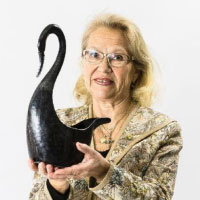
Sirkka Heinonen
Moderator
Professor Emerita, Finland Futures Research Centre (FFRC), University of Turku
Professor Emerita, Finland Futures Research Centre (FFRC), University of Turku
Professor emerita in Futures Studies at University of Turku, Finland Futures Research Centre (FFRC). Previously Chief Research Scientist at VTT Technical Research Centre of Finland, in futures studies and technology foresight. PhD degree from Helsinki University and over 40 years’ experience in research and teaching in futures studies. Member of the Club of Rome since 2005, Chair of the Helsinki Node and Member of the Board of Directors of the Millennium Project, and Director of FFRC Helsinki Office. Honorary Member of Futures Finland, and of the Finnish Society for Futures Studies.
This panel explores how educators and practitioners across d...
This panel explores how educators and practitioners across disciplines and geographies are discovering that the tools needed to teach for transformation are far more varied than any single curriculum tradition has allowed. From arts-based and culture-led learning to regenerative design, place-based immersion, tabletop role-play, biodiversity governance, and the creative possibilities of collective intelligence, the case studies gathered here share a common conviction: that changing how people learn requires changing how they experience the world. The central question the session puts to its participants is a practical one: what opens a mindset, and how do we know when it has shifted? The aim is to move beyond the familiar call for interdisciplinarity and into the messier, more honest territory of what it costs and yields when educators trust the full range of human experience as a site of learning.
Jack Davies
Moderator
Founder / Creative Campaigner, Making Movements / Project Everyone
Founder / Creative Campaigner, Making Movements / Project Everyone
Jack is a creative campaigner working at the intersection of education, democracy and culture. For the last 5 years he has stewarded the World's Largest Lesson in partnership with UNICEF and UNESCO, reaching millions of children worldwide. At Project Everyone he is part of the team that helped launch the United Nations Sustainable Development Goals. As a DJ, musician and Founder of Making Movements, he is passionate about harnessing the power of culture and creativity for impact. His work is increasingly focused on civic engagement and democratic system change, in response to the institutional crises we are facing worldwide.
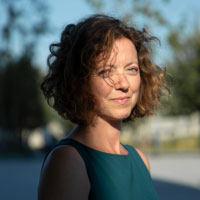
Julia Bentz
Senior researcher, University of Lisbon
Senior researcher, University of Lisbon
Dr. Julia Bentz is a senior researcher at the University of Lisbon and a lecturer at Freie Universität Berlin. She has a background in interdisciplinary social sciences, with an MPhil in Development Studies and a PhD in Economics, and her research focuses on social-ecological resilience, nature-based climate change adaptation, and sustainability transformation. With more than 10 years of experience in art-science approaches, her particular interest lies in how to engage diverse communities in social-ecological resilience processes and how to foster learning.
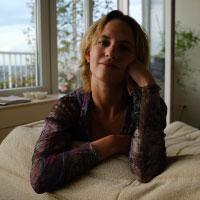
Rosalie Le Grelle
Community Research Coordinator, Human Impacts Institute
Community Research Coordinator, Human Impacts Institute
Rosalie is an interdisciplinary activist-researcher, working with frontline communities towards environmental justice. Her work bridges the research-action gap through participatory research, creative cultural strategies, and community mobilisation tools that support bottom-up transformation. As Community Research Coordinator at the Human Impacts Institute, she leads projects exploring how art and culture can advance environmental justice. These projects provide grassroots groups with research and strategy that support narrative- and system-changing initiatives. Rosalie holds degrees from the University of Saint-Louis Brussels, Utrecht University, and the Autonomous University of Barcelona.
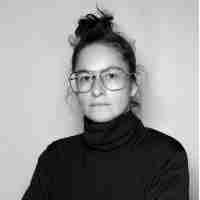
Sabine Lettmann
Senior Lecturer, Falmouth University
Senior Lecturer, Falmouth University
Sabine Lettmann is an academic, design practitioner and consultant with international experience in teaching designing for and within local fashion systems based in Germany and the UK. Since the beginning of her career in 2001, she continuously challenges her practice to address the pressing environmental, social and cultural issues of the global fashion industry. Sabine holds a Senior Fellowship of the Higher Education Academy; she is also a Fellow of The RSA and an Associate of FACE (Fashion and the Arts Creating Equity). She currently pursues a PhD by Published Work at the London College of Fashion.
This panel examines what happens when educational institutio...
This panel examines what happens when educational institutions stop waiting for permission to change and begin redrawing, from the inside, the boundaries that govern whose knowledge counts, which languages carry legitimacy, and whether hope and uncertainty have any place in formal learning. Drawing on case studies from engineering faculties, architecture studios, early childhood classrooms, and leadership programmes across more than a dozen countries, it asks what institutional change looks like when it reaches beyond policy announcement into the daily experience of learners and educators. The aim is to surface the conditions, the costs, and the possibilities that emerge when institutions treat hope as a structural commitment to be enacted and practiced.
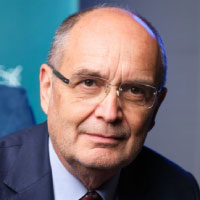
Adrian Curaj
General Director, the Executive Agency for Higher Education, Science and Innovation funding Agency (UEFISCDI)
General Director, the Executive Agency for Higher Education, Science and Innovation funding Agency (UEFISCDI)
ADRIAN CURAJ is General Director of the Executive Agency for Higher Education, Science and Innovation funding Agency (UEFISCDI), head of the UNESCO Chair on Science and Innovation Policies at the National University of Political Studies and Public Administration. He had been working as a consultant for the World Bank, UNESCO, UNIDO, ETF and EC for studies in Tertiary Education, Science and Innovation and Foresight, formerly at the forefront of foresight for policy, theory & practice of Smart Specialization and Open Science in Romania. He is a former minister of education, science and innovation, and fellow of WAAS.
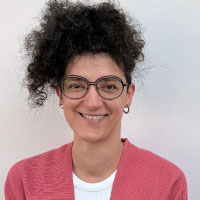
Giulia Pellizzato
Education Manager – Cambio io cambia il mondo project, Be The Hope Foundation
Education Manager – Cambio io cambia il mondo project, Be The Hope Foundation
Dr Giulia Pellizzato is the Education Manager of the project “Cambio io, cambia il mondo” [I change, the world changes], promoted by Be The Hope Foundation (Rome, Italy). In this role, she trains and works with teachers and volunteers to deliver empowering sustainability education in public secondary schools across Italy. She is currently completing her second PhD in Value-Creating Education for Global Citizenship at DePaul University (Chicago, USA). Previously, Pellizzato worked at Brown and Harvard University, where she won accolades for her contribution to integrating sustainability education and innovative pedagogies at the Department of Romance Languages and Literatures.
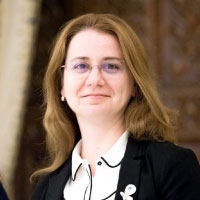
Ligia Deca
Moderator
Secretary General, Romanian National Commission for UNESCO and Vice-Rector at the National University of Political Studies and Public Administration (SNSPA)
Secretary General, Romanian National Commission for UNESCO and Vice-Rector at the National University of Political Studies and Public Administration (SNSPA)
She is Secretary-General of the Romanian National Commission for UNESCO and Vice-Rector at the National University of Political Studies and Public Administration (SNSPA). She served as Romania’s Minister of Education from 2022 to 2024, immediately before Daniel David, and has extensive experience in education policy and international cooperation, including coordinating the Bologna Process Secretariat and serving on the UN Secretary-General’s High-Level Panel on the Teaching Profession.
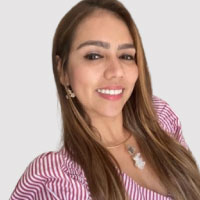
Maria Angelica Mejia Caceres
Head of Training Programme Development, Learning Planet Institute, Université Paris Cité
Head of Training Programme Development, Learning Planet Institute, Université Paris Cité
Dr. María Angélica Mejía Cáceres is an educator, researcher and Learning Architecture specialist at the Learning Planet Institute and Université Paris Cité, France. Her work focuses on transformative education, sustainability, and the role of diverse knowledge systems in addressing complex socio-environmental challenges. She holds a PhD in Science and Health Education from the Federal University of Rio de Janeiro and has worked across Latin America and Europe. Her research and practice explore how education can foster critical thinking, collective agency and new ways of relating to knowledge, society and the living world, contributing to the transformation of learning systems.
This panel examines the deeper paradigm shift underway in ho...
This panel examines the deeper paradigm shift underway in how we think about knowledge, learning, and the relationship between human beings and the living world. Drawing on perspectives from regenerative education, Indigenous epistemologies, Earth system science, ecocentric philosophy, and the emerging possibilities of collective intelligence, it asks what it means to call the current moment in education a revolution. The question at its centre is a fundamental rethinking of what learning is for, who it is with, and what kind of human being it is trying to cultivate. The aim is to sit honestly with that question, and to find in the diversity of responses gathered here the beginnings of something the dominant educational paradigm has rarely made room for: a genuine revolutionary hope.
Dana Aly López Solís
University lecturer and environmental communicator, Naturaleza, Arte y Cultura
University lecturer and environmental communicator, Naturaleza, Arte y Cultura
Dana Aly López Solís, PhD, is a sustainability scholar, educator, and environmental humanities advocate whose work explores the intersections of ecological intelligence, ecocentric thought, education, and cultural transformation. She holds a PhD in Environment and Sustainable Development from the Complutense University of Madrid and currently teaches doctoral programs in Sustainable Development and Sustainable Business Administration. Dana is the founder of Naturaleza, Arte y Cultura, a platform dedicated to ecoliteracy and environmental humanities. She advocates for educational paradigms that cultivate ecological awareness, responsibility, and hope, drawing on insights from sustainability science, Indigenous knowledge systems, and the study of intelligence and agency
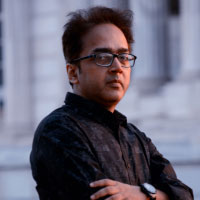
Rajat Chaudhuri
Independent author with various publishers, Author
Independent author with various publishers, Author
Rajat Chaudhuri is an acclaimed bilingual writer, climate communicator, and researcher whose work spans climate fiction, translation, and non-fiction, including novels like The Butterfly Effect and Spellcasters, and critical texts like The Climate Crossroads. He has co-edited noted solarpunk anthologies like Multispecies Cities and contributed to the climate change video game Survive the Century. Rajat’s bibliography also features a collection of children’s climate stories and translated Bengali literature. A British Council Charles Wallace Fellow and Hawthornden Fellow, Rajat has advocated for developing nations at the UN and he is a co-author of an upcoming publication by the Club of Rome.
Participants will have the opportunity to visit the National...
Participants will have the opportunity to visit the National Bank of Romania Museum, located in the historic Old Palace of the Bank. The visit will offer an insight into Romania’s monetary and banking history through an impressive collection of coins, banknotes and other items of numismatic significance.
Use the main entrance of the National Bank of Romania, loca...
Use the main entrance of the National Bank of Romania,
located at 8 Doamnei Street, Bucharest, Romania.
https://maps.app.goo.gl/w7KmbHsuRu4VuPuL6
You will need to produce a valid ID for entry. See FAQs3
For thousands of years, population growth has been treated a...
For thousands of years, population growth has been treated as both inevitable and desirable. Ugo Bardi argues that this era is ending. Birth rates are falling across nearly all regions of the world, and though the global total may rise for a little longer, the underlying trend points towards stabilisation and decline well before the end of the century — a U-turn likely to begin sooner than most governments assume, with social, economic and political consequences far larger than they are prepared for.
In this keynote, Bardi presents the argument of his new report to the Club of Rome, The End of Population Growth. Drawing on demography, history and systems dynamics, he sets population change within a long-term cycle shaped by resources, pollution, social stress and economic structures, and challenges both the old Malthusian fear of overpopulation and the assumption that technology alone can sustain perpetual growth. Depopulation, he argues, is not inherently a catastrophe; the real danger lies in denial, and in clinging to economic models that no longer match reality. The session asks how societies might adapt — through policy, technology and cultural change — before decline forces the question upon them.
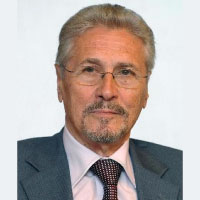
Emil Constantinescu
Former President of Romania (1996–2000); President, Levant Institute of Advanced Studies for the Culture of Peace
Former President of Romania (1996–2000); President, Levant Institute of Advanced Studies for the Culture of Peace
Emil Constantinescu former President of Romania from 1996-2000, following his tenure as Rector of the University of Bucharest and President of the National Council of Rectors. He currently chairs the Institute for Advanced Studies in Levant Culture and Civilization and the Romanian Foundation for Democracy. He is a member of the governing bodies of the World University Consortium and the World Academy of Art and Science. A distinguished geologist and advocate for democracy, peace, and the rule of law, he has received numerous international awards, including the European Statesman of the Year Award and the Coudenhove - Kalergi European Prize.

Till Kellerhoff
Moderator
Director (Content & Programmes), The Club of Rome
Director (Content & Programmes), The Club of Rome
Till Kellerhoff is Director of Content & Programmes at the Club of Rome, where he shapes and connects the organisation's programmatic work on systems change, political economy and socio-ecological transformation. He is Director of Earth4All, a global initiative developed with leading economists and scientists to accelerate a just and sustainable future. His writing includes Tax the Rich (2024), co-authored with Jørgen Randers, contributions to the SPIEGEL bestseller Earth for All (2022) and Earth4All Deutschland (2024), a roadmap for transformation in Germany.
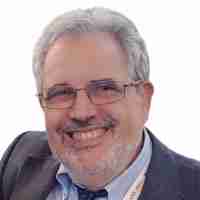
Ugo Bardi
Board Member, The Club of Rome
Board Member, The Club of Rome
Ugo Bardi was a faculty member of the University of Florence (Italy) until 2022. He is a member of the Club of Rome Board, member of the World Academy of Arts and Sciences (WAAS) and the Italian Society of System Dynamics Executive Committee.
He is the author of a number of books and articles on the subject of sustainability, mineral resources, renewable energy, climate change and ecosystem stability. Among them is, The Limits to Growth Revisited (2011), the reports to the Club of Rome: Extracted (2014), The Seneca Effect(2017), The Empty Sea (2019), Limits and Beyond (2022), The Future of Transportation (2024 – in Italian) and The End of Population Growth (2026).
Bardi’s work focuses on promoting a sustainable transition to renewable energy on the basis of a quantitative energy yield analysis. In his blogs, The Seneca Effect and The Carbon Conundrum, he examines the collapse of complex systems and the current modifications of the ecosystem created by human activity.
Bardi lives in Florence (Italy) with his wife, Grazia.
Central banks shape the transition, whether they choose to o...
Central banks shape the transition, whether they choose to or not. Their decisions on interest rates, collateral, asset purchases and banking supervision determine which investments are affordable and which activities receive credit. This session asks how far monetary authorities should go, from measuring climate and nature-related risks to actively supporting a regenerative economy. It brings together central bankers and leading thinkers to explore the mandates, tools and forms of money that could align monetary systems with long-term societal and planetary goals, and the questions of power and legitimacy that this raises.
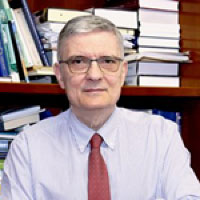
Daniel Daianu
Chairman of the Fiscal Council, National Bank of Romania
Chairman of the Fiscal Council, National Bank of Romania
Daniel Dăianu is chairman of Romania's Fiscal Council, adviser on EU affairs to the Governor of the National Bank of Romania, member of the Romanian Academy and professor of economics at the School of Political and Administrative Studies, Bucharest. He is a former Finance Minister (1997–1998), Chief Economist (1992–1997) and Board member (2014–2019) of the National Bank of Romania, and a former member of the European Parliament (2007–2009). He has held visiting positions at Harvard, Berkeley and UCLA. His books include Emerging Europe and the Great Recession (2018) and Crises and the Temptation of Authoritarianism (2025).
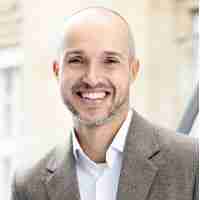
Josef Meichenitsch
Executive Board Member, OeNB / ARCOR
Executive Board Member, OeNB / ARCOR
Josef Meichenitsch, MA is a trained economist and member of the Executive Board of the Oesterreichische Nationalbank (OeNB), where he is responsible for the division “Payments, Financial Education, and IT.” Previously, he headed the department “European Supervisory Principles and Strategy” in the OeNB’s banking supervision. In this role, he was a member of several working groups at the European Central Bank and the European Banking Authority. Under his leadership, the OeNB’s first climate stress test for the Austrian banking system was developed and conducted. Before joining the OeNB, he held positions at the Austrian Financial Market Authority (FMA)
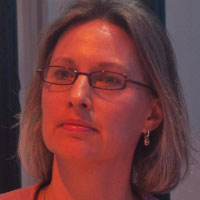
Linda van Goor
Moderator
Harmonist, Regulatory Communication bv
Harmonist, Regulatory Communication bv
I'm a harmonist, always searching for the balance that does justice to all, especially in the context of finance and financial regulation. I worked for universities, the banking sector, De Nederlandsche Bank, the IMF and the European Commission as a teacher, advisor, moderator, issues-manager, supervisor, regulator and trainer. In these capacities I've been explaining, connecting, coordinating, translating, drafting and applying European regulatory issues in the financial sector. The European idea “united in diversity” has always been my guiding principle. Finding common interests and bridging the gap between legal text and day-to-day practice is my DNA.
Fifty years after The Limits to Growth placed resource const...
Fifty years after The Limits to Growth placed resource constraints at the centre of global debate, materials and energy are once again defining questions of our time. The energy transition, the rapid build-out of AI and data-centre infrastructure, and a new wave of military rearmament are converging on the same finite pool of critical minerals, with no democratic mechanism to govern how it is shared. Supply chains transfer ecological costs to the Global South while concentrating the gains elsewhere, and resource security is increasingly framed through the narrow lens of competitiveness and defence.
This session asks how we move beyond an extractive, linear model — extract, produce, consume, dispose — towards governance rooted in stewardship, sufficiency and global justice. Panellists explore what it would take to keep material and energy use within planetary boundaries while reducing inequality, treating the Earth's resources as a shared inheritance rather than a contest to be won.
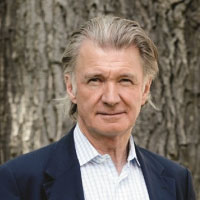
Anders Wijkman
Honorary President, Club of Rome
Honorary President, Club of Rome
Anders Wijkman is a Swedish opinion leader and author. He is the Honorary President of the global Think Tank, the Club of Rome. He is a member of the International Resource Panel (IRP) – a UN appointed expert body” to build and share the knowledge needed to improve the use of our natural resources worldwide”. He is member of the Supervisory Board the Climate-KIC Foundation, an innovation program at EU level with the objective to help Member States to transition to low-carbon energy economies.
Emil Constantinescu
Former President of Romania (1996–2000); President, Levant Institute of Advanced Studies for the Culture of Peace
Former President of Romania (1996–2000); President, Levant Institute of Advanced Studies for the Culture of Peace
Emil Constantinescu former President of Romania from 1996-2000, following his tenure as Rector of the University of Bucharest and President of the National Council of Rectors. He currently chairs the Institute for Advanced Studies in Levant Culture and Civilization and the Romanian Foundation for Democracy. He is a member of the governing bodies of the World University Consortium and the World Academy of Art and Science. A distinguished geologist and advocate for democracy, peace, and the rule of law, he has received numerous international awards, including the European Statesman of the Year Award and the Coudenhove - Kalergi European Prize.
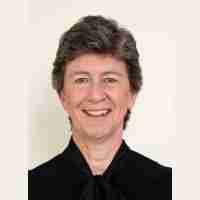
Linda Godfrey
Manager: Circular Innovation South Africa, Council for Scientific and Industrial Research (CSIR)
Manager: Circular Innovation South Africa, Council for Scientific and Industrial Research (CSIR)
Prof Linda Godfrey is a Principal Scientist at the CSIR and Extraordinary Professor at North-West University, South Africa, and holds a PhD in Engineering. She is an internationally recognised expert in the circular economy, bringing +30 years' experience in advancing science, technology and innovation for sustainable resource management in developing economies. She manages Circular Innovation South Africa, supporting the implementation of South Africa's Circular Economy STI Strategy. A passionate communicator, she brings unique insights on how circular strategies can address development, environmental sustainability and social equity. She lectures internationally on the circular economy in the context of developing countries.
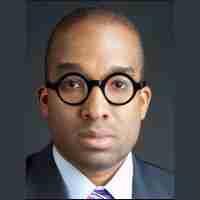
Michael Dorsey
Moderator
Director & Chair, Walton Sustainability Solutions Service
Director & Chair, Walton Sustainability Solutions Service
Prof. Dr . M. K. Dorsey is a recognised expert on global energy, environment, finance and sustainability matters. In 1997, in Glasgow, Scotland, Rotary International bestowed him their highest honor: The Paul Harris Medal for Distinguished Service to Humanity. Dr . Dorsey is a member of the Club of Rome. Prof. Dr . Dorsey presently holds the Chair & Directorship of the Rob and Melani Walton Sustainability Solutions Service (WS3) — the planet’s first extension service for sustainability, based in Tempe, Arizona on the campus of Arizona State University.
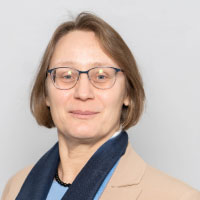
Monika Dittrich
Lead of cross-cutting issue material flows and modelling, Wuppertal Institut
Lead of cross-cutting issue material flows and modelling, Wuppertal Institut
Expertise of more than 25 yrs in MFA, trade issues, system modelling, footprint accounting. Lead of large research projects investigating lock-in-effects of societal and economic decisions, potentials and effects of circular economy measures and overall potentials of circular economy, options and effects of a reduction of resource use.
Please indicate your attendance
Please indicate your attendance
This panel examines what it means to pivot the science model...
This panel examines what it means to pivot the science model by rethinking who defines valid knowledge, whose questions shape research agendas, and what research and innovation funding is ultimately for. This goes beyond funding more research. Research and innovation funding is one of the most consequential and least examined levers shaping what futures become possible: what gets funded shapes what knowledge gets produced, and what knowledge gets produced shapes what responses become imaginable. The current architecture rests on assumptions rarely questioned, that peer review alone validates knowledge, that disciplines are the natural unit of inquiry, and that states and markets are the default funders of science. These are historical choices with real consequences for whose knowledge counts.
Bringing together voices from research, policy, and community practice, this session explores what an International Decade of Sciences for Sustainable Development could mean in practice, and how this shift might inform the knowledge systems and funding architectures shaping the post-2030 development agenda.
Carlos Alvarez Pereira
Moderator
Secretary General, The Club of Rome
Secretary General, The Club of Rome
Carlos Alvarez Pereira is a senior professional combining more than 30 years of experience in research and innovation, entrepreneurship, and business management, with a passion for complexity thinking and transdisciplinarity. He is keen on exploring the cultural transformation required to cross the threshold towards equitable human wellbeing within a healthy biosphere. Carlos is the Secretary General at the Club of Rome International.

Felix García Lausín
Secretary General, CYTED
Secretary General, CYTED
Félix Garcia Lausín is a Telecommunication Engineer with a master’s degree from the Polytechnic University of Madrid. After a French Government postgraduate grant at INRIA, he was professor of Applied Mathematics at Jaume I University. In 1995 he became the first Secretary General of the Conference of Rectors of Spanish Universities (CRUE), serving until 2004. He then joined the Cabinet of the Presidency before becoming Secretary General of the University Coordination Council. Since 2012 he has been Commissioner-Coordinator of the Ibero-American Knowledge Space. He is Secretary General of the Ibero-American University Council and Executive Secretary of the EU-CELAC University Council.
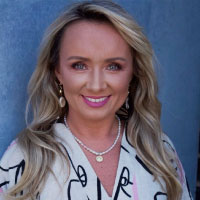
Joanna Wisniewska
Head of Global Engagement, -
Head of Global Engagement, -
Joanna Wiśniewska is Head of Global Engagement at the Geneva Science and Diplomacy Anticipator (GESDA), where she connects emerging science with diplomacy, global governance and international cooperation. She leads engagement with governments, multilateral organisations and other partners, drawing on more than two decades of experience across policy and development, including at the OECD. Her work focuses on anticipatory science diplomacy: bringing diverse actors upstream, before scientific and technological breakthroughs become established realities, and broadening participation in defining the questions that shape future research and policy.
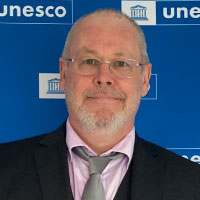
Steven Hartman
Founding Executive Director, BRIDGES Coalition
Founding Executive Director, BRIDGES Coalition
Founding Executive Director, BRIDGES Sustainability Science Coalition, Management of Social Transformations programme. Also a researcher, writer and policy work.
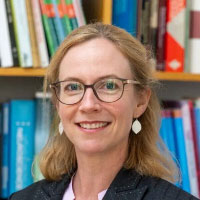
Vanessa McBride
Science Director, Acting Head of the Centre for Science Futures, International Science Council
Science Director, Acting Head of the Centre for Science Futures, International Science Council
Vanessa has a PhD in Astronomy from the University of Southampton. She has over fifteen years of experience, including various leadership roles, across university, research infrastructure and science-for-development settings in an international arena. She joins the ISC from the International Astronomical Union’s Office for Astronomy for Development, where she bridged the gap between the academic astronomy and development communities. Vanessa brings a passion for science and society, a perspective from the global south, and a connection with the member organizations of ISC.
This panel explores what it would mean to steer artificial i...
This panel explores what it would mean to steer artificial intelligence toward collective intelligence, technology built to strengthen how communities, institutions, and ecosystems reason and act together, rather than concentrate power or extract value from them. As AI plays an ever-greater role in shaping research priorities, resource allocation, and governance, the real question isn't just what AI can do, but whose knowledge informs it and whose interests it ultimately advances.
Drawing together voices from technology, policy, academia, and community practice, the session considers how AI development can become regenerative, shaped with the Global Majority as an equal voice, rooted in diverse ways of knowing, co-created with the communities it affects, and measured against its contribution to human wellbeing, planetary health, and peace.
Anders Wijkman
Moderator
Honorary President, Club of Rome
Honorary President, Club of Rome
Anders Wijkman is a Swedish opinion leader and author. He is the Honorary President of the global Think Tank, the Club of Rome. He is a member of the International Resource Panel (IRP) – a UN appointed expert body” to build and share the knowledge needed to improve the use of our natural resources worldwide”. He is member of the Supervisory Board the Climate-KIC Foundation, an innovation program at EU level with the objective to help Member States to transition to low-carbon energy economies.
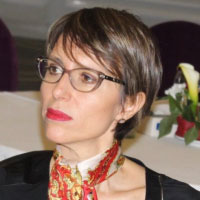
Lobna Jeribi
President, Solidar (Southern Voice Network)
President, Solidar (Southern Voice Network)
Dr. Lobna Jeribi is a researcher and think tank leader working on systemic transformation through data and artificial intelligence. She holds a PhD in Information Systems and AI from INSA Lyon and founded SOLIDAR Think Tank, applying the Problem-Driven Iterative Adaptation (PDIA) methodology to public sector reform via its OTPP Public Policy Observatory. She is a member of Southern Voice and Board Member of the African Climate Foundation and Okwelians. A former Tunisian Minister of Reforms and the first Tunisian woman Minister of Higher Education and Scientific Research, she bridges applied research and public sector transformation across Africa and MENA.
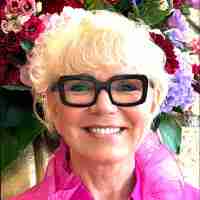
Mariana Bozesan
President AQAL Foundation, Club of Rome, WAAS (World Academy of Art and Science)
President AQAL Foundation, Club of Rome, WAAS (World Academy of Art and Science)
Dr. Bozesan is a polymath, an AI pioneer, an award-winning deep-tech investor, published author, and successful serial entrepreneur. Her accolades include the prestigious Golden Angelina Award as Europe’s Female Angel Investor, Best European Early-Stage Investor, full membership in the Club of Rome, and a Fellowship with the World Academy of Art and Science. Her moonshot is the application of technology to decarbonize the global economy to ensure safe planetary boundaries. Educated at Stanford and KIT, she holds an MS in AI & CS and a PhD in Cognitive Science.
Paul Shrivastava
Co President, Club of Rome
Co President, Club of Rome
Paul Shrivastava is Co-President of The Club of Rome and a visionary leader in management and sustainability. A Professor of Management and Organisations, he previously served as Chief Sustainability Officer at The Pennsylvania State University and Executive Director of Future Earth. He held the David O’Brien Professorship at Concordia University, Montreal, and founded the UNESCO Chair for Arts and Sustainable Enterprise at ICN Business School, France. He founded several companies and non-profits, and the ONE Division of the Academy of Management. He holds a Ph.D. from the University of Pittsburgh and has published 17 books and over 100 articles.
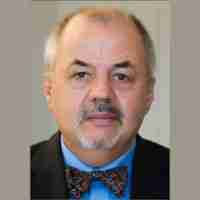
Petru Dumitriu
Lecturer, DiploFoundation, London Institute for Sustainable Development
Lecturer, DiploFoundation, London Institute for Sustainable Development
Retired diplomat, former member of the Joint Inspection Unit of the United Nations and Ambassador of the Council of Europe to UN Geneva. He teaches online and face-to-face courses on multilateral diplomacy for Diplo Academy, World Association for Sustainable Development, and London Institute for Sustainable Development. Author of United Nations reports on Knowledge Management, UN – Private Sector Partnership Arrangements, Strengthening Policy Research Uptake, Policies and Platforms in Support of Learning, Blockchain Applications . Knowledge Management Award (Austria), 2017 Sustainable Development Award (United Kingdom), 2018.
The health of a nation is usually read from its economic out...
The health of a nation is usually read from its economic output. But what if the truer measure lay in the condition of its ecosystems, its communities and its people — and in how these sustain one another? One Health and Earth4All are distinct frameworks, with different origins and vocabularies, yet they point in the same direction: both treat environmental, societal and human health as inseparable, and both read today's overlapping crises as one systemic condition rather than a set of isolated problems.
This session explores what it would mean to build on that convergence as the basis for a coherent national project — accounting honestly for the social and ecological capital we consume, and shifting from curative policies to preventive ones. Taking Romania and its exceptional natural endowment as a live case, it sits within Earth4All's national engagement strategies, which adapt the initiative's five turnarounds to local circumstances alongside research institutions and civil society. With country initiatives already under way in Kenya, Germany, Austria and Brazil, a Romanian strand would extend that family of engagements while keeping each approach rooted in its own context.
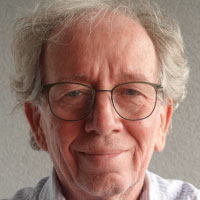
Fritz Hinterberger
The Club of Rome, Member
The Club of Rome, Member
Fritz Hinterberger brings his socio-economic, economic and ecological expertise to the Club of Rome. His work has focused on how sustainable development can contribute to increasing quality of life and prosperity for all people on our planet, while respecting both natural limits and equitable distribution. With a doctorate in economics, he was Head of the Ecological Economics and Ecological Economic Policy group as well as the Department of Material Flows and Structural Change at the renowned Wuppertal Institute for Climate, Environment and Energy and has excellent contacts to Austrian and international NGOs as well as with scientific and political institutions.
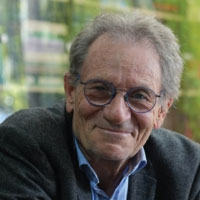
Ioan NEGRUTIU
Professor emeritus, cole Normale supérieure de Lyon, Institut Michel Serres
Professor emeritus, cole Normale supérieure de Lyon, Institut Michel Serres
Ioan NEGRUȚIU graduated in agricultural engineering and biology. He is presently professor emeritus at the ENS de Lyon, France and Honorary Member of the Institut universitaire de France and of the Romanian Academy. In his research, after completing a doctoral thesis at the Vrije Universiteit Brussel, and post-doctoral positions and sabbaticals at the University of Paris-Orsay, INRA de Versailles, Friedrich Mischer Institute, and Caltech, he became interested in the reproduction and evolution of plants and the molecular mechanisms of floral diversity. These questions address issues related to the origins of agriculture and the stewardship of primary resources: biomass, soil, water.
Monika Dittrich
Lead of cross-cutting issue material flows and modelling, Wuppertal Institut
Lead of cross-cutting issue material flows and modelling, Wuppertal Institut
Expertise of more than 25 yrs in MFA, trade issues, system modelling, footprint accounting. Lead of large research projects investigating lock-in-effects of societal and economic decisions, potentials and effects of circular economy measures and overall potentials of circular economy, options and effects of a reduction of resource use.
Till Kellerhoff
Moderator
Director (Content & Programmes), The Club of Rome
Director (Content & Programmes), The Club of Rome
Till Kellerhoff is Director of Content & Programmes at the Club of Rome, where he shapes and connects the organisation's programmatic work on systems change, political economy and socio-ecological transformation. He is Director of Earth4All, a global initiative developed with leading economists and scientists to accelerate a just and sustainable future. His writing includes Tax the Rich (2024), co-authored with Jørgen Randers, contributions to the SPIEGEL bestseller Earth for All (2022) and Earth4All Deutschland (2024), a roadmap for transformation in Germany.
This session brings together National Associations and Chapt...
This session brings together National Associations and Chapters from across the Club of Rome network, alongside other conference participants interested in how the organisation works at a national level, for a participatory conversation about collaboration. Rather than a panel format, it invites everyone in the room to shape the discussion directly, surfacing how National Associations and Chapters currently work with each other, with the organisation, and with partners and networks in their respective countries, while also exploring how individuals can get involved with a National Association where one exists near them. Working together, participants will map shared challenges, exchange practical approaches and pinpoint concrete opportunities for joint action and involvement, building a stronger, more connected network of national and regional activity.
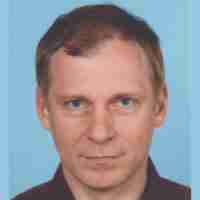
Aleksander Zidanšek
Vice Dean, Jožef Stefan International Postgraduate School
Vice Dean, Jožef Stefan International Postgraduate School
Aleksander Zidanšek is a physicist, researcher at "Jožef Stefan" Institute (IJS), Professor of Physics at the University of Maribor, Vice Dean of the Jožef Stefan International Postgraduate School (IPS), Vice-President (Science & Technology) of the World Academy of Art and Science, Member of the European Academy of Sciences and Arts, Member of the Club of Rome and President of the Slovenian Association for the Club of Rome.
Carlos Alvarez Pereira
Moderator
Secretary General, The Club of Rome
Secretary General, The Club of Rome
Carlos Alvarez Pereira is a senior professional combining more than 30 years of experience in research and innovation, entrepreneurship, and business management, with a passion for complexity thinking and transdisciplinarity. He is keen on exploring the cultural transformation required to cross the threshold towards equitable human wellbeing within a healthy biosphere. Carlos is the Secretary General at the Club of Rome International.
Josef Meichenitsch
Executive Board Member, OeNB / ARCOR
Executive Board Member, OeNB / ARCOR
Josef Meichenitsch, MA is a trained economist and member of the Executive Board of the Oesterreichische Nationalbank (OeNB), where he is responsible for the division “Payments, Financial Education, and IT.” Previously, he headed the department “European Supervisory Principles and Strategy” in the OeNB’s banking supervision. In this role, he was a member of several working groups at the European Central Bank and the European Banking Authority. Under his leadership, the OeNB’s first climate stress test for the Austrian banking system was developed and conducted. Before joining the OeNB, he held positions at the Austrian Financial Market Authority (FMA)
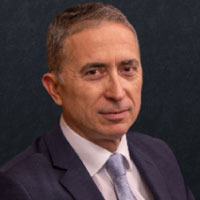
Mugur Tolici
Executive Director, Romanian Association for the Club of Rome (ARCoR)
Executive Director, Romanian Association for the Club of Rome (ARCoR)
Mugur Tolici is Executive Director of the Romanian Association for the Club of Rome (ARCoR), overseeing its day-to-day management, activities and partnerships. He is Director of the Issue, Treasury and Cash Management Department at the National Bank of Romania, responsible for the lifecycle of the national currency and the resilience of the cash infrastructure. With over 25 years of central banking experience, he has served as Head of the Monetary Policy Division, Adviser to the Deputy Governor, Head of the Governor’s Office and Director of Human Resources. He is also a Professor at SNSPA in Bucharest.

Nebojša Nešković
Serbian Chapter of the Club of Rome, Serbian Chapter of the Club of Rome
Serbian Chapter of the Club of Rome, Serbian Chapter of the Club of Rome
Dr. Nebojša Nešković is a theoretical physicist also involved in accelerator technologies. Currently, he is Full Member of the Club of Rome and President of its Serbian Chapter, Fellow of the World Academy of Art and Science, and Member of the Scientific Council of the Joint Institute for Nuclear Research, Dubna, Russia. His scientific career was realized in the Vinča Institute of Nuclear Sciences, Belgrade, Serbia. That included his heading of the TESLA Project, which comprised the construction and use of a large-scale facility for science, technology, medicine, and education with ion beams. He has authored numerous scientific publications.

Ricardo DÍEZ-HOCHLEITNER
Full Member of the CoR and President of the Spanish Chapter of the Club of Rome, Spanish Chapter of the Club of Rome
Full Member of the CoR and President of the Spanish Chapter of the Club of Rome, Spanish Chapter of the Club of Rome
Born in 1953. Law degree (Autonomous University of Madrid). Diploma International Relations at the Diplomatic School of Spain. Professional Diplomat, member of the Spanish Foreign Service (1979 to 20249. Head of the EU-Coordination and of the European bilateral Directorates at Spain's MFA. Diplomatic Counsellor of PM Felipe Gonzalez. Deputy Chief of the Spanish Royal Household. Has served in Germany, and as Ambassador of Spain in Dominican Republic, Austria, OCDE -Paris- and Morocco. Currently, vicepresident of Tecnicas Reunidas International, Secretary General of INCIPE, member of the UWC Foundation and president of Spanish Chapter of CoR
Use the main entrance of the National Bank of Romania, loca...
Use the main entrance of the National Bank of Romania,
located at 8 Doamnei Street, Bucharest, Romania.
https://maps.app.goo.gl/w7KmbHsuRu4VuPuL6
You will need to produce a valid ID for entry. See FAQs
Humanity has crossed multiple planetary boundaries, yet the ...
Humanity has crossed multiple planetary boundaries, yet the economic model driving that overshoot remains firmly in place — one built to pursue growth above all else, even as it deepens inequality and strains the social fabric. For fifty years the warning has been that a system organised around endless expansion cannot be sustained on a finite planet; today its costs are increasingly visible, in ecological breakdown and in societies under mounting pressure. People are calling for systems change — but what that means, and what could take its place, is far less clear.
This session moves from that diagnosis towards the alternatives. Drawing on new evidence of how far public trust has frayed across the world's largest economies, it asks what it would mean to place the wellbeing of people and planet — rather than output alone — at the centre of economic life. What does a good life for all within planetary boundaries actually require, and how might progress be measured beyond GDP? Panellists explore what these alternative futures could look like in practice, and how societies might move from diagnosis to transformation — a discussion, ultimately, of why there remain no limits to hope.
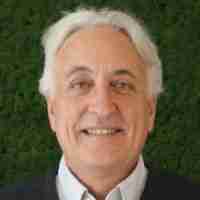
Bob Costanza
Professor, Institute for Global Prosperity | University College London
Professor, Institute for Global Prosperity | University College London
Robert Costanza (PhD, FASSA, FRSA) is a leading ecological economist, he is currently Professor of Ecological Economics at the Institute for Global Prosperity, University College London and a 2024 winner of the Blue Planet Prize. He is an Ambassador of the Wellbeing Economy Alliance (WEAll), co-founder and past-president of the International Society for Ecological Economics, and founding editor of Ecological Economics. He is the current editor in chief of The Anthropocene Review. Professor Costanza’s transdisciplinary research integrates the study of humans and the rest of nature to address research, policy and management issues at multiple times.
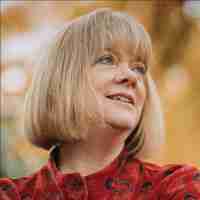
Kate Pickett
Professor for the Public Understanding of Social Science, University of York
Professor for the Public Understanding of Social Science, University of York
Kate Pickett OBE FRSA FFPH FAcSS is Professor for the Public Understanding of Social Science at the University of York and co-director of Health Equity North. A social epidemiologist, Kate’s research focuses on the wider determinants of health and inequalities in wellbeing. Kate is co-author, with Richard Wilkinson, of the bestselling and award winning The Spirit Level (2009) and The Inner Level (2018). Her latest book, The Good Society, was published this year. Kate is a co-founder of The Equality Trust and a trustee of the Wellbeing Economy Alliance. She received an OBE in 2023 for services to societal equality.
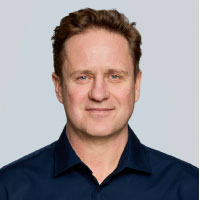
Lars Fogh Mortensen
Moderator
Member, The Club of Rome
Member, The Club of Rome
Lars Fogh Mortensen is a trained economist of development and environment from the University of Copenhagen with 30 years of experience on sustainability in international organisations. He has worked as an expert at the EU Institution the European Environment Agency (EEA) for over 20 years, most recently focusing my work on preparing reports and providing policy advice on sustainable consumption, circular economy, circular business models, textiles and plastics. He has written and co-written a large number of reports and academic articles on sustainability. Lars is a co-founder of the Global Wellbeing Economy Alliance (WEALL) and the Danish Wellbeing Economy Alliance.
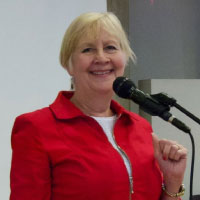
Vala Ragnarsdottir
Professor Emerity, University of Iceland
Professor Emerity, University of Iceland
Dr. Kristín Vala Ragnarsdóttir is Professor Emerita of Earth and Sustainability Science at the University of Iceland and an internationally recognized academic and activist. Her work focuses on regenerating Earth systems and advancing wellbeing. She has advised governments and international organizations on sustainability and wellbeing issues. Vala co-founded the Wellbeing Economy Alliance as well as the Hub in Iceland and serves on the boards of environmental NGOs. She is a member of several international academies a member of the Balaton Group and the Club of Rome. In 2026, she co-authored the Elgar Companion to Creating a Regenerative Economy for Wellbeing.
This panel examines what it means to move beyond peace as th...
This panel examines what it means to move beyond peace as the mere absence of war toward planetary peace: a regenerative, systemic approach centred on the wellbeing of people, the planet, and future generations. As climate disruption, biodiversity loss, and escalating conflict converge, traditional security frameworks are proving inadequate to an interdependent, polycrisis world.
Drawing on the Club of Rome's Planetary Peace framework, the panel explores pathways from extractive growth to restorative economies, from militarised security to anticipatory, polycentric governance, and from hegemonic dominance to collaboration grounded in indigenous knowledge and harmony with nature.
Aleksander Zidanšek
Vice Dean, Jožef Stefan International Postgraduate School
Vice Dean, Jožef Stefan International Postgraduate School
Aleksander Zidanšek is a physicist, researcher at "Jožef Stefan" Institute (IJS), Professor of Physics at the University of Maribor, Vice Dean of the Jožef Stefan International Postgraduate School (IPS), Vice-President (Science & Technology) of the World Academy of Art and Science, Member of the European Academy of Sciences and Arts, Member of the Club of Rome and President of the Slovenian Association for the Club of Rome.
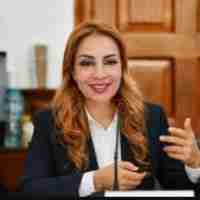
Cristina Popa Tache
Dean; Director, Danubius International University, Romania; World Academy of Art and Science (WAAS) – EXTRA Steering Committee
Dean; Director, Danubius International University, Romania; World Academy of Art and Science (WAAS) – EXTRA Steering Committee
Cristina Elena Popa Tache is Dean of the Faculty of Law and International Governance at Danubius International University, Director of the CIRET Paris Observatory of Law and Transdisciplinarity, and Academic and Scientific Expert in the European Parliamentary Research Service (EPRS). She serves in leadership roles within the European Society of International Law (ESIL) and CIRET Paris. Recipient of the 2024 Romanian Academy Nicolae Titulescu Award for International Law, her research focuses on international law, anticipatory governance, transdisciplinarity, artificial intelligence, digital governance, and emerging technologies, with publications by leading international academic publishers.
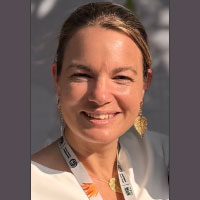
Elise Buckle
CEO, Founder, Climate Bridges
CEO, Founder, Climate Bridges
Elise Buckle is a globally recognized climate leader and sustainability expert, who has been working in the field of climate and sustainability for 25 years. She is Founder and CEO of Climate Bridges and Member of the Club of Rome. She is an International Gender Champion and Co-Chair of the Climate and Gender Impact Group, as well as senior advisor to the UN and to the World Bank. This year she has been invited to support the UN Global Conscious Food Systems Alliance Summit preparations focusing on organizational culture, women leadership and high- trust circles facilitation.
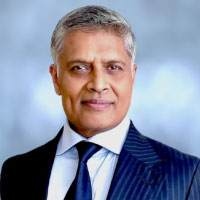
Ketan Patel
Chair, Force for Good
Chair, Force for Good
Ketan Patel is founder and chairman of Force for Good, established in support of the UN Secretary-General’s sustainable development roadmap. He co-founded and leads Greater Pacific Capital, investing in high-growth enterprises delivering sustainable impact. Previously, Ketan was a Managing Director at Goldman Sachs, a partner and board member at KPMG, and worked at Hewlett-Packard. He is a Fellow and Trustee of the World Academy of Art and Science and serves on several global sustainability and human security initiatives. Ketan is the author of The Master Strategist, with a foreword by Nelson Mandela, and also studied at LSE, King’s College London.
Paul Shrivastava
Moderator
Co President, Club of Rome
Co President, Club of Rome
Paul Shrivastava is Co-President of The Club of Rome and a visionary leader in management and sustainability. A Professor of Management and Organisations, he previously served as Chief Sustainability Officer at The Pennsylvania State University and Executive Director of Future Earth. He held the David O’Brien Professorship at Concordia University, Montreal, and founded the UNESCO Chair for Arts and Sustainable Enterprise at ICN Business School, France. He founded several companies and non-profits, and the ONE Division of the Academy of Management. He holds a Ph.D. from the University of Pittsburgh and has published 17 books and over 100 articles.
Carlos Alvarez Pereira
Moderator
Secretary General, The Club of Rome
Secretary General, The Club of Rome
Carlos Alvarez Pereira is a senior professional combining more than 30 years of experience in research and innovation, entrepreneurship, and business management, with a passion for complexity thinking and transdisciplinarity. He is keen on exploring the cultural transformation required to cross the threshold towards equitable human wellbeing within a healthy biosphere. Carlos is the Secretary General at the Club of Rome International.
Mugur Tolici
Executive Director, Romanian Association for the Club of Rome (ARCoR)
Executive Director, Romanian Association for the Club of Rome (ARCoR)
Mugur Tolici is Executive Director of the Romanian Association for the Club of Rome (ARCoR), overseeing its day-to-day management, activities and partnerships. He is Director of the Issue, Treasury and Cash Management Department at the National Bank of Romania, responsible for the lifecycle of the national currency and the resilience of the cash infrastructure. With over 25 years of central banking experience, he has served as Head of the Monetary Policy Division, Adviser to the Deputy Governor, Head of the Governor’s Office and Director of Human Resources. He is also a Professor at SNSPA in Bucharest.
Paul Shrivastava
Co President, Club of Rome
Co President, Club of Rome
Paul Shrivastava is Co-President of The Club of Rome and a visionary leader in management and sustainability. A Professor of Management and Organisations, he previously served as Chief Sustainability Officer at The Pennsylvania State University and Executive Director of Future Earth. He held the David O’Brien Professorship at Concordia University, Montreal, and founded the UNESCO Chair for Arts and Sustainable Enterprise at ICN Business School, France. He founded several companies and non-profits, and the ONE Division of the Academy of Management. He holds a Ph.D. from the University of Pittsburgh and has published 17 books and over 100 articles.
Silvia Zimmermann
Co President, The Club of Rome
Co President, The Club of Rome
Argentinean writer, philosopher and international lecturer. A disciple and collaborator of Jorge Luis Borges, she studied Anglo-Saxon and Icelandic literature with him, Anthropology at La Sorbonne, and Philosophy at the University of Buenos Aires. She is a columnist for La Nación, co-directed the Vatican’s 2017 Watershed Conference on Water, and coordinated “Dialogues in Paradise” in Japan. She is International Director of the Mokichi Okada Chair on Beauty, University of Bologna, and founder and President of the Argentinean Chapter of the Club of Rome and a member of its International Executive Committee. Author of Manuel y la lluvia, La Dimensión de
lo Imposible, Grupo Editor Latinoamericano, Buenos Aires,1992
La otra orilla. Ediciones Agón, Buenos Aires, 1992
Please select if you will be attending
Please select if you will be attending
Please indicate if you wish to join this visit by 15 October...
Please indicate if you wish to join this visit by 15 October.
email rap@clubofrome.org
Excursion is complimentary
Participants will have the opportunity to visit the Palace of Parliament, Bucharest’s most iconic landmark and the world’s second-largest administrative building after the Pentagon. Originally known as the House of the People, it was commissioned by Nicolae Ceaușescu during Romania’s communist regime. The programme will include a private guided tour of its impressive halls, offering insights into the building’s history, monumental architecture and present-day role as the seat of the Romanian Parliament.
Please indicate your interest by 15 October. Email rap@clu...
Please indicate your interest by 15 October. Email rap@clublofrome.org
Complimentary excursion
Participants may opt for a day trip to Sinaia, one of Romania’s best-known mountain resorts, located in the scenic Carpathian Mountains, approximately 125 km north of Bucharest.
Departure and return from National Bank of Romania.
The program will include visits to some of the area’s most important historical and cultural landmarks. Subject to availability, participants will visit Peleș Castle, the former summer residence of the Romanian royal family and one of Europe’s most impressive royal castles, or the nearby Pelișor Castle, an elegant Art Nouveau residence built for King Ferdinand and Queen Marie. The itinerary may also include Cantacuzino Castle in Bușteni, a remarkable early 20th-century residence offering panoramic views of the Bucegi Mountains.
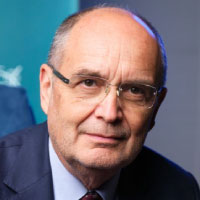
General Director, the Executive Agency for Higher Education, Science and Innovation funding Agency (UEFISCDI)
READ BIOthe Executive Agency for Higher Education, Science and Innovation funding Agency (UEFISCDI)
ADRIAN CURAJ is General Director of the Executive Agency for Higher Education, Science and Innovation funding Agency (UEFISCDI), head of the UNESCO Chair on Science and Innovation Policies at the National University of Political Studies and Public Administration. He had been working as a consultant for the World Bank, UNESCO, UNIDO, ETF and EC for studies in Tertiary Education, Science and Innovation and Foresight, formerly at the forefront of foresight for policy, theory & practice of Smart Specialization and Open Science in Romania. He is a former minister of education, science and innovation, and fellow of WAAS.
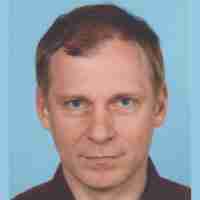
Vice Dean, Jožef Stefan International Postgraduate School
READ BIOJožef Stefan International Postgraduate School
Aleksander Zidanšek is a physicist, researcher at "Jožef Stefan" Institute (IJS), Professor of Physics at the University of Maribor, Vice Dean of the Jožef Stefan International Postgraduate School (IPS), Vice-President (Science & Technology) of the World Academy of Art and Science, Member of the European Academy of Sciences and Arts, Member of the Club of Rome and President of the Slovenian Association for the Club of Rome.
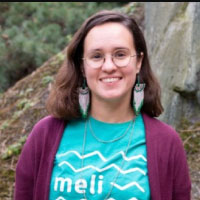
Director, Meli Bees Network
READ BIOMeli Bees Network
Omágua woman connecting multiple leaders from Indigenous and local communities via Meli, a global Impact Network.
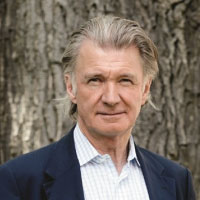
Honorary President, Club of Rome
READ BIOClub of Rome
Anders Wijkman is a Swedish opinion leader and author. He is the Honorary President of the global Think Tank, the Club of Rome. He is a member of the International Resource Panel (IRP) – a UN appointed expert body” to build and share the knowledge needed to improve the use of our natural resources worldwide”. He is member of the Supervisory Board the Climate-KIC Foundation, an innovation program at EU level with the objective to help Member States to transition to low-carbon energy economies.
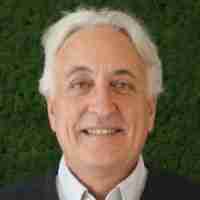
Professor, Institute for Global Prosperity | University College London
READ BIOInstitute for Global Prosperity | University College London
Robert Costanza (PhD, FASSA, FRSA) is a leading ecological economist, he is currently Professor of Ecological Economics at the Institute for Global Prosperity, University College London and a 2024 winner of the Blue Planet Prize. He is an Ambassador of the Wellbeing Economy Alliance (WEAll), co-founder and past-president of the International Society for Ecological Economics, and founding editor of Ecological Economics. He is the current editor in chief of The Anthropocene Review. Professor Costanza’s transdisciplinary research integrates the study of humans and the rest of nature to address research, policy and management issues at multiple times.
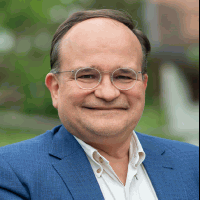
Secretary General, The Club of Rome
READ BIOThe Club of Rome
Carlos Alvarez Pereira is a senior professional combining more than 30 years of experience in research and innovation, entrepreneurship, and business management, with a passion for complexity thinking and transdisciplinarity. He is keen on exploring the cultural transformation required to cross the threshold towards equitable human wellbeing within a healthy biosphere. Carlos is the Secretary General at the Club of Rome International.
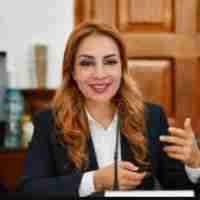
Dean; Director, Danubius International University, Romania; World Academy of Art and Science (WAAS) – EXTRA Steering Committee
READ BIODanubius International University, Romania; World Academy of Art and Science (WAAS) – EXTRA Steering Committee
Cristina Elena Popa Tache is Dean of the Faculty of Law and International Governance at Danubius International University, Director of the CIRET Paris Observatory of Law and Transdisciplinarity, and Academic and Scientific Expert in the European Parliamentary Research Service (EPRS). She serves in leadership roles within the European Society of International Law (ESIL) and CIRET Paris. Recipient of the 2024 Romanian Academy Nicolae Titulescu Award for International Law, her research focuses on international law, anticipatory governance, transdisciplinarity, artificial intelligence, digital governance, and emerging technologies, with publications by leading international academic publishers.
University lecturer and environmental communicator, Naturaleza, Arte y Cultura
READ BIONaturaleza, Arte y Cultura
Dana Aly López Solís, PhD, is a sustainability scholar, educator, and environmental humanities advocate whose work explores the intersections of ecological intelligence, ecocentric thought, education, and cultural transformation. She holds a PhD in Environment and Sustainable Development from the Complutense University of Madrid and currently teaches doctoral programs in Sustainable Development and Sustainable Business Administration. Dana is the founder of Naturaleza, Arte y Cultura, a platform dedicated to ecoliteracy and environmental humanities. She advocates for educational paradigms that cultivate ecological awareness, responsibility, and hope, drawing on insights from sustainability science, Indigenous knowledge systems, and the study of intelligence and agency
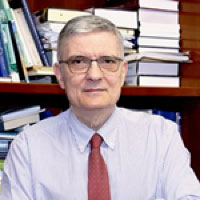
Chairman of the Fiscal Council, National Bank of Romania
READ BIONational Bank of Romania
Daniel Dăianu is chairman of Romania's Fiscal Council, adviser on EU affairs to the Governor of the National Bank of Romania, member of the Romanian Academy and professor of economics at the School of Political and Administrative Studies, Bucharest. He is a former Finance Minister (1997–1998), Chief Economist (1992–1997) and Board member (2014–2019) of the National Bank of Romania, and a former member of the European Parliament (2007–2009). He has held visiting positions at Harvard, Berkeley and UCLA. His books include Emerging Europe and the Great Recession (2018) and Crises and the Temptation of Authoritarianism (2025).
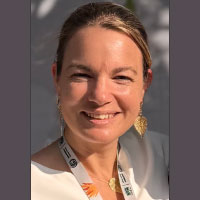
CEO, Founder, Climate Bridges
READ BIOClimate Bridges
Elise Buckle is a globally recognized climate leader and sustainability expert, who has been working in the field of climate and sustainability for 25 years. She is Founder and CEO of Climate Bridges and Member of the Club of Rome. She is an International Gender Champion and Co-Chair of the Climate and Gender Impact Group, as well as senior advisor to the UN and to the World Bank. This year she has been invited to support the UN Global Conscious Food Systems Alliance Summit preparations focusing on organizational culture, women leadership and high- trust circles facilitation.
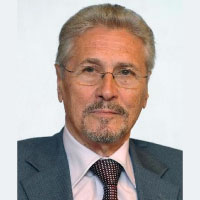
Former President of Romania (1996–2000); President, Levant Institute of Advanced Studies for the Culture of Peace
READ BIOLevant Institute of Advanced Studies for the Culture of Peace
Emil Constantinescu former President of Romania from 1996-2000, following his tenure as Rector of the University of Bucharest and President of the National Council of Rectors. He currently chairs the Institute for Advanced Studies in Levant Culture and Civilization and the Romanian Foundation for Democracy. He is a member of the governing bodies of the World University Consortium and the World Academy of Art and Science. A distinguished geologist and advocate for democracy, peace, and the rule of law, he has received numerous international awards, including the European Statesman of the Year Award and the Coudenhove - Kalergi European Prize.

Secretary General, CYTED
READ BIOCYTED
Félix Garcia Lausín is a Telecommunication Engineer with a master’s degree from the Polytechnic University of Madrid. After a French Government postgraduate grant at INRIA, he was professor of Applied Mathematics at Jaume I University. In 1995 he became the first Secretary General of the Conference of Rectors of Spanish Universities (CRUE), serving until 2004. He then joined the Cabinet of the Presidency before becoming Secretary General of the University Coordination Council. Since 2012 he has been Commissioner-Coordinator of the Ibero-American Knowledge Space. He is Secretary General of the Ibero-American University Council and Executive Secretary of the EU-CELAC University Council.
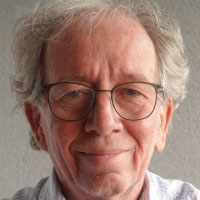
The Club of Rome, Member
READ BIOMember
Fritz Hinterberger brings his socio-economic, economic and ecological expertise to the Club of Rome. His work has focused on how sustainable development can contribute to increasing quality of life and prosperity for all people on our planet, while respecting both natural limits and equitable distribution. With a doctorate in economics, he was Head of the Ecological Economics and Ecological Economic Policy group as well as the Department of Material Flows and Structural Change at the renowned Wuppertal Institute for Climate, Environment and Energy and has excellent contacts to Austrian and international NGOs as well as with scientific and political institutions.
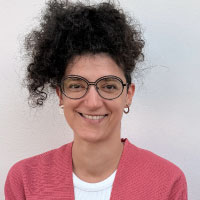
Education Manager – Cambio io cambia il mondo project, Be The Hope Foundation
READ BIOBe The Hope Foundation
Dr Giulia Pellizzato is the Education Manager of the project “Cambio io, cambia il mondo” [I change, the world changes], promoted by Be The Hope Foundation (Rome, Italy). In this role, she trains and works with teachers and volunteers to deliver empowering sustainability education in public secondary schools across Italy. She is currently completing her second PhD in Value-Creating Education for Global Citizenship at DePaul University (Chicago, USA). Previously, Pellizzato worked at Brown and Harvard University, where she won accolades for her contribution to integrating sustainability education and innovative pedagogies at the Department of Romance Languages and Literatures.
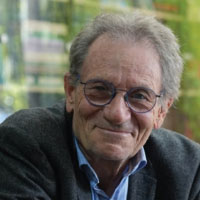
Professor emeritus, cole Normale supérieure de Lyon, Institut Michel Serres
READ BIOcole Normale supérieure de Lyon, Institut Michel Serres
Ioan NEGRUȚIU graduated in agricultural engineering and biology. He is presently professor emeritus at the ENS de Lyon, France and Honorary Member of the Institut universitaire de France and of the Romanian Academy. In his research, after completing a doctoral thesis at the Vrije Universiteit Brussel, and post-doctoral positions and sabbaticals at the University of Paris-Orsay, INRA de Versailles, Friedrich Mischer Institute, and Caltech, he became interested in the reproduction and evolution of plants and the molecular mechanisms of floral diversity. These questions address issues related to the origins of agriculture and the stewardship of primary resources: biomass, soil, water.
Founder / Creative Campaigner, Making Movements / Project Everyone
READ BIOMaking Movements / Project Everyone
Jack is a creative campaigner working at the intersection of education, democracy and culture. For the last 5 years he has stewarded the World's Largest Lesson in partnership with UNICEF and UNESCO, reaching millions of children worldwide. At Project Everyone he is part of the team that helped launch the United Nations Sustainable Development Goals. As a DJ, musician and Founder of Making Movements, he is passionate about harnessing the power of culture and creativity for impact. His work is increasingly focused on civic engagement and democratic system change, in response to the institutional crises we are facing worldwide.

Social Innovation Consultant & Independent Researcher, Society for Social Ecological Systems | Harvard Alumna
READ BIOSociety for Social Ecological Systems | Harvard Alumna
Jacqueline is a systems change researcher and social innovation practitioner exploring how we might redesign social, economic and organisational systems to create conditions conducive to life. Her work starts from a simple idea: our sustainability crisis is not only technical, but relational, requiring us to rethink our relationships with each other and the natural world. Drawing on 15 years across social innovation, organisational transformation and environmental and social justice, Jacqueline bridges research with practice. She holds a Master’s in Sustainability from Harvard and co-chairs the Society for Social-Ecological Systems Working Group on Equity, Justice and Indigenous Knowledge Systems.
Head of Global Engagement,
READ BIO
Joanna Wiśniewska is Head of Global Engagement at the Geneva Science and Diplomacy Anticipator (GESDA), where she connects emerging science with diplomacy, global governance and international cooperation. She leads engagement with governments, multilateral organisations and other partners, drawing on more than two decades of experience across policy and development, including at the OECD. Her work focuses on anticipatory science diplomacy: bringing diverse actors upstream, before scientific and technological breakthroughs become established realities, and broadening participation in defining the questions that shape future research and policy.
Executive Board Member, OeNB / ARCOR
READ BIOOeNB / ARCOR
Josef Meichenitsch, MA is a trained economist and member of the Executive Board of the Oesterreichische Nationalbank (OeNB), where he is responsible for the division “Payments, Financial Education, and IT.” Previously, he headed the department “European Supervisory Principles and Strategy” in the OeNB’s banking supervision. In this role, he was a member of several working groups at the European Central Bank and the European Banking Authority. Under his leadership, the OeNB’s first climate stress test for the Austrian banking system was developed and conducted. Before joining the OeNB, he held positions at the Austrian Financial Market Authority (FMA)
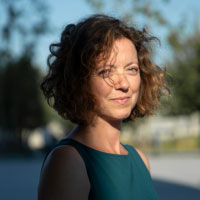
Senior researcher, University of Lisbon
READ BIOUniversity of Lisbon
Dr. Julia Bentz is a senior researcher at the University of Lisbon and a lecturer at Freie Universität Berlin. She has a background in interdisciplinary social sciences, with an MPhil in Development Studies and a PhD in Economics, and her research focuses on social-ecological resilience, nature-based climate change adaptation, and sustainability transformation. With more than 10 years of experience in art-science approaches, her particular interest lies in how to engage diverse communities in social-ecological resilience processes and how to foster learning.
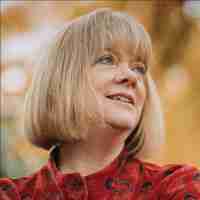
Professor for the Public Understanding of Social Science, University of York
READ BIOUniversity of York
Kate Pickett OBE FRSA FFPH FAcSS is Professor for the Public Understanding of Social Science at the University of York and co-director of Health Equity North. A social epidemiologist, Kate’s research focuses on the wider determinants of health and inequalities in wellbeing. Kate is co-author, with Richard Wilkinson, of the bestselling and award winning The Spirit Level (2009) and The Inner Level (2018). Her latest book, The Good Society, was published this year. Kate is a co-founder of The Equality Trust and a trustee of the Wellbeing Economy Alliance. She received an OBE in 2023 for services to societal equality.
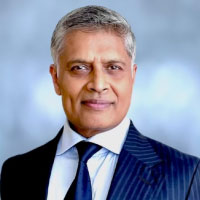
Chair, Force for Good
READ BIOForce for Good
Ketan Patel is founder and chairman of Force for Good, established in support of the UN Secretary-General’s sustainable development roadmap. He co-founded and leads Greater Pacific Capital, investing in high-growth enterprises delivering sustainable impact. Previously, Ketan was a Managing Director at Goldman Sachs, a partner and board member at KPMG, and worked at Hewlett-Packard. He is a Fellow and Trustee of the World Academy of Art and Science and serves on several global sustainability and human security initiatives. Ketan is the author of The Master Strategist, with a foreword by Nelson Mandela, and also studied at LSE, King’s College London.
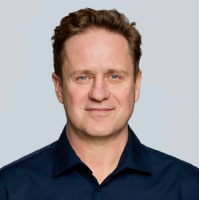
Member, The Club of Rome
READ BIOThe Club of Rome
Lars Fogh Mortensen is a trained economist of development and environment from the University of Copenhagen with 30 years of experience on sustainability in international organisations. He has worked as an expert at the EU Institution the European Environment Agency (EEA) for over 20 years, most recently focusing my work on preparing reports and providing policy advice on sustainable consumption, circular economy, circular business models, textiles and plastics. He has written and co-written a large number of reports and academic articles on sustainability. Lars is a co-founder of the Global Wellbeing Economy Alliance (WEALL) and the Danish Wellbeing Economy Alliance.
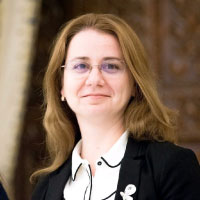
Secretary General, Romanian National Commission for UNESCO and Vice-Rector at the National University of Political Studies and Public Administration (SNSPA)
READ BIORomanian National Commission for UNESCO and Vice-Rector at the National University of Political Studies and Public Administration (SNSPA)
She is Secretary-General of the Romanian National Commission for UNESCO and Vice-Rector at the National University of Political Studies and Public Administration (SNSPA). She served as Romania’s Minister of Education from 2022 to 2024, immediately before Daniel David, and has extensive experience in education policy and international cooperation, including coordinating the Bologna Process Secretariat and serving on the UN Secretary-General’s High-Level Panel on the Teaching Profession.
Harmonist, Regulatory Communication bv
READ BIORegulatory Communication bv
I'm a harmonist, always searching for the balance that does justice to all, especially in the context of finance and financial regulation. I worked for universities, the banking sector, De Nederlandsche Bank, the IMF and the European Commission as a teacher, advisor, moderator, issues-manager, supervisor, regulator and trainer. In these capacities I've been explaining, connecting, coordinating, translating, drafting and applying European regulatory issues in the financial sector. The European idea “united in diversity” has always been my guiding principle. Finding common interests and bridging the gap between legal text and day-to-day practice is my DNA.
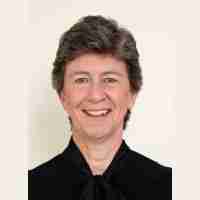
Manager: Circular Innovation South Africa, Council for Scientific and Industrial Research (CSIR)
READ BIOCouncil for Scientific and Industrial Research (CSIR)
Prof Linda Godfrey is a Principal Scientist at the CSIR and Extraordinary Professor at North-West University, South Africa, and holds a PhD in Engineering. She is an internationally recognised expert in the circular economy, bringing +30 years' experience in advancing science, technology and innovation for sustainable resource management in developing economies. She manages Circular Innovation South Africa, supporting the implementation of South Africa's Circular Economy STI Strategy. A passionate communicator, she brings unique insights on how circular strategies can address development, environmental sustainability and social equity. She lectures internationally on the circular economy in the context of developing countries.
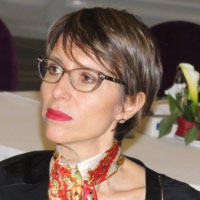
President, Solidar (Southern Voice Network)
READ BIOSolidar (Southern Voice Network)
Dr. Lobna Jeribi is a researcher and think tank leader working on systemic transformation through data and artificial intelligence. She holds a PhD in Information Systems and AI from INSA Lyon and founded SOLIDAR Think Tank, applying the Problem-Driven Iterative Adaptation (PDIA) methodology to public sector reform via its OTPP Public Policy Observatory. She is a member of Southern Voice and Board Member of the African Climate Foundation and Okwelians. A former Tunisian Minister of Reforms and the first Tunisian woman Minister of Higher Education and Scientific Research, she bridges applied research and public sector transformation across Africa and MENA.
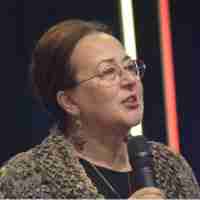
Associated professor, University of Bucharest
READ BIOUniversity of Bucharest
Madlen Șerban is an associate professor at the Faculty of Psychology and Educational Sciences, University of Bucharest, and a member of the Romanian American Fulbright Commission. For the past four years she served as Secretary General of the Romanian National Commission for UNESCO. From 2009 to 2017 she was Director of the European Training Foundation (ETF), appointed by the President of the European Commission. She also (co-)chaired the Human Capital Development Task Force under the Stability Pact for South Eastern Europe, and has worked with UNESCO, the OECD, the World Bank and Cedefop.
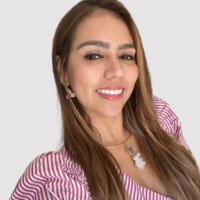
Head of Training Programme Development, Learning Planet Institute, Université Paris Cité
READ BIOLearning Planet Institute, Université Paris Cité
Dr. María Angélica Mejía Cáceres is an educator, researcher and Learning Architecture specialist at the Learning Planet Institute and Université Paris Cité, France. Her work focuses on transformative education, sustainability, and the role of diverse knowledge systems in addressing complex socio-environmental challenges. She holds a PhD in Science and Health Education from the Federal University of Rio de Janeiro and has worked across Latin America and Europe. Her research and practice explore how education can foster critical thinking, collective agency and new ways of relating to knowledge, society and the living world, contributing to the transformation of learning systems.
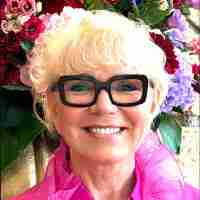
President AQAL Foundation, Club of Rome, WAAS (World Academy of Art and Science)
READ BIOClub of Rome, WAAS (World Academy of Art and Science)
Dr. Bozesan is a polymath, an AI pioneer, an award-winning deep-tech investor, published author, and successful serial entrepreneur. Her accolades include the prestigious Golden Angelina Award as Europe’s Female Angel Investor, Best European Early-Stage Investor, full membership in the Club of Rome, and a Fellowship with the World Academy of Art and Science. Her moonshot is the application of technology to decarbonize the global economy to ensure safe planetary boundaries. Educated at Stanford and KIT, she holds an MS in AI & CS and a PhD in Cognitive Science.
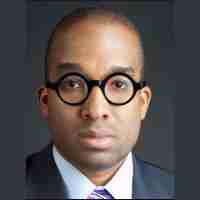
Director & Chair, Walton Sustainability Solutions Service
READ BIOWalton Sustainability Solutions Service
Prof. Dr . M. K. Dorsey is a recognised expert on global energy, environment, finance and sustainability matters. In 1997, in Glasgow, Scotland, Rotary International bestowed him their highest honor: The Paul Harris Medal for Distinguished Service to Humanity. Dr . Dorsey is a member of the Club of Rome. Prof. Dr . Dorsey presently holds the Chair & Directorship of the Rob and Melani Walton Sustainability Solutions Service (WS3) — the planet’s first extension service for sustainability, based in Tempe, Arizona on the campus of Arizona State University.
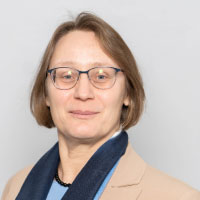
Lead of cross-cutting issue material flows and modelling, Wuppertal Institut
READ BIOWuppertal Institut
Expertise of more than 25 yrs in MFA, trade issues, system modelling, footprint accounting. Lead of large research projects investigating lock-in-effects of societal and economic decisions, potentials and effects of circular economy measures and overall potentials of circular economy, options and effects of a reduction of resource use.
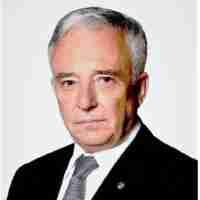
Governor, National Bank of Romania
READ BIONational Bank of Romania
Mugur Isărescu has been Governor of the National Bank of Romania since 1990, and was also Prime Minister of Romania (1999–2000) and Director of the Institute of World Economy. A graduate of the Faculty of Commerce (1971), he holds a Ph.D. in Economics from the Bucharest Academy of Economic Studies and has been a member of the Romanian Academy since 2006, authoring or coordinating over 60 books and research papers. Named “Central Banker of the Year” by The Banker in 2001, he has received numerous honours, including the Légion d’Honneur and the National Order “The Star of Romania”.
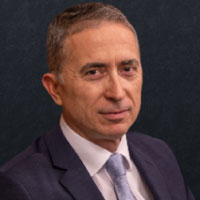
Executive Director, Romanian Association for the Club of Rome (ARCoR)
READ BIORomanian Association for the Club of Rome (ARCoR)
Mugur Tolici is Executive Director of the Romanian Association for the Club of Rome (ARCoR), overseeing its day-to-day management, activities and partnerships. He is Director of the Issue, Treasury and Cash Management Department at the National Bank of Romania, responsible for the lifecycle of the national currency and the resilience of the cash infrastructure. With over 25 years of central banking experience, he has served as Head of the Monetary Policy Division, Adviser to the Deputy Governor, Head of the Governor’s Office and Director of Human Resources. He is also a Professor at SNSPA in Bucharest.

Serbian Chapter of the Club of Rome, Serbian Chapter of the Club of Rome
READ BIOSerbian Chapter of the Club of Rome
Dr. Nebojša Nešković is a theoretical physicist also involved in accelerator technologies. Currently, he is Full Member of the Club of Rome and President of its Serbian Chapter, Fellow of the World Academy of Art and Science, and Member of the Scientific Council of the Joint Institute for Nuclear Research, Dubna, Russia. His scientific career was realized in the Vinča Institute of Nuclear Sciences, Belgrade, Serbia. That included his heading of the TESLA Project, which comprised the construction and use of a large-scale facility for science, technology, medicine, and education with ion beams. He has authored numerous scientific publications.

PhD Supervisor, School of Advanced Studies of the Romanian Academy (SCOSAAR), Romanian Academy
READ BIORomanian Academy
Otilia MANTA is PhD supervisor at the School of Advanced Studies of the Romanian Academy (SCOSAAR) and Professor at the Romanian-American University. She is a scientific researcher affiliated with the Romanian Academy and Co-Supervisor within the Lincoln Global Postdoctoral Research Programme. She holds a PhD in Economics (Finance) and has over 25 years of experience in financial consultancy, banking, EU-funded project management, and interdisciplinary research. Her expertise includes digital finance, FinTech, financial innovation, entrepreneurship, and sustainable financial systems. She has authored books, book chapters, and peer-reviewed articles, and actively serves in editorial, evaluation, and advisory roles in international academic contexts.
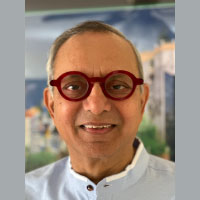
Co President, Club of Rome
READ BIOClub of Rome
Paul Shrivastava is Co-President of The Club of Rome and a visionary leader in management and sustainability. A Professor of Management and Organisations, he previously served as Chief Sustainability Officer at The Pennsylvania State University and Executive Director of Future Earth. He held the David O’Brien Professorship at Concordia University, Montreal, and founded the UNESCO Chair for Arts and Sustainable Enterprise at ICN Business School, France. He founded several companies and non-profits, and the ONE Division of the Academy of Management. He holds a Ph.D. from the University of Pittsburgh and has published 17 books and over 100 articles.
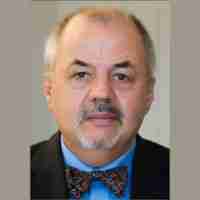
Lecturer, DiploFoundation, London Institute for Sustainable Development
READ BIODiploFoundation, London Institute for Sustainable Development
Retired diplomat, former member of the Joint Inspection Unit of the United Nations and Ambassador of the Council of Europe to UN Geneva. He teaches online and face-to-face courses on multilateral diplomacy for Diplo Academy, World Association for Sustainable Development, and London Institute for Sustainable Development. Author of United Nations reports on Knowledge Management, UN – Private Sector Partnership Arrangements, Strengthening Policy Research Uptake, Policies and Platforms in Support of Learning, Blockchain Applications . Knowledge Management Award (Austria), 2017 Sustainable Development Award (United Kingdom), 2018.
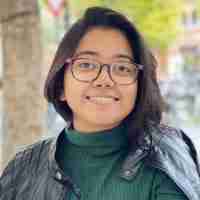
Programme Lead, The Club of Rome
READ BIOThe Club of Rome
Raad has a development sector background, advancing sustainability and social justice through research, programme coordination and cross-cultural engagement. She holds a BA in Economics from BRAC University and two Master’s degrees from KU Leuven in Social and Cultural Anthropology and Development Studies.
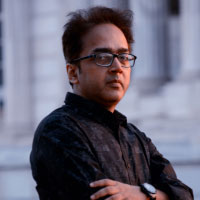
Independent author with various publishers, Author
READ BIOAuthor
Rajat Chaudhuri is an acclaimed bilingual writer, climate communicator, and researcher whose work spans climate fiction, translation, and non-fiction, including novels like The Butterfly Effect and Spellcasters, and critical texts like The Climate Crossroads. He has co-edited noted solarpunk anthologies like Multispecies Cities and contributed to the climate change video game Survive the Century. Rajat’s bibliography also features a collection of children’s climate stories and translated Bengali literature. A British Council Charles Wallace Fellow and Hawthornden Fellow, Rajat has advocated for developing nations at the UN and he is a co-author of an upcoming publication by the Club of Rome.

Full Member of the CoR and President of the Spanish Chapter of the Club of Rome, Spanish Chapter of the Club of Rome
READ BIOSpanish Chapter of the Club of Rome
Born in 1953. Law degree (Autonomous University of Madrid). Diploma International Relations at the Diplomatic School of Spain. Professional Diplomat, member of the Spanish Foreign Service (1979 to 20249. Head of the EU-Coordination and of the European bilateral Directorates at Spain's MFA. Diplomatic Counsellor of PM Felipe Gonzalez. Deputy Chief of the Spanish Royal Household. Has served in Germany, and as Ambassador of Spain in Dominican Republic, Austria, OCDE -Paris- and Morocco. Currently, vicepresident of Tecnicas Reunidas International, Secretary General of INCIPE, member of the UWC Foundation and president of Spanish Chapter of CoR
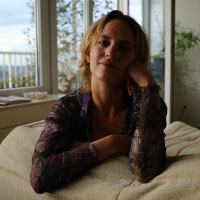
Community Research Coordinator, Human Impacts Institute
READ BIOHuman Impacts Institute
Rosalie is an interdisciplinary activist-researcher, working with frontline communities towards environmental justice. Her work bridges the research-action gap through participatory research, creative cultural strategies, and community mobilisation tools that support bottom-up transformation. As Community Research Coordinator at the Human Impacts Institute, she leads projects exploring how art and culture can advance environmental justice. These projects provide grassroots groups with research and strategy that support narrative- and system-changing initiatives. Rosalie holds degrees from the University of Saint-Louis Brussels, Utrecht University, and the Autonomous University of Barcelona.
Senior Lecturer, Falmouth University
READ BIOFalmouth University
Sabine Lettmann is an academic, design practitioner and consultant with international experience in teaching designing for and within local fashion systems based in Germany and the UK. Since the beginning of her career in 2001, she continuously challenges her practice to address the pressing environmental, social and cultural issues of the global fashion industry. Sabine holds a Senior Fellowship of the Higher Education Academy; she is also a Fellow of The RSA and an Associate of FACE (Fashion and the Arts Creating Equity). She currently pursues a PhD by Published Work at the London College of Fashion.

Founder, The People's Ark
READ BIOThe People's Ark
Samia Dumbuya is a British-Sierra Leonean climate justice organiser, researcher and educator, and founder of The People’s Ark CIC, a community-led organisation building climate resilience and green skills. She is also a founding member of the Black Ecofeminist Network UK. Her work sits at the intersection of climate justice, community organising, sustainable transitions and collective power, with a focus on creating accessible spaces for communities to shape the futures they want. Samia is an MSc Sustainable Resources student at UCL and has worked across research, advocacy, education and grassroots organising. She is passionate about connecting climate action with joy, imagination,
Co President, The Club of Rome
READ BIOThe Club of Rome
Argentinean writer, philosopher and international lecturer. A disciple and collaborator of Jorge Luis Borges, she studied Anglo-Saxon and Icelandic literature with him, Anthropology at La Sorbonne, and Philosophy at the University of Buenos Aires. She is a columnist for La Nación, co-directed the Vatican’s 2017 Watershed Conference on Water, and coordinated “Dialogues in Paradise” in Japan. She is International Director of the Mokichi Okada Chair on Beauty, University of Bologna, and founder and President of the Argentinean Chapter of the Club of Rome and a member of its International Executive Committee. Author of Manuel y la lluvia, La Dimensión de
lo Imposible, Grupo Editor Latinoamericano, Buenos Aires,1992
La otra orilla. Ediciones Agón, Buenos Aires, 1992
Professor Emerita, Finland Futures Research Centre (FFRC), University of Turku
READ BIOFinland Futures Research Centre (FFRC), University of Turku
Professor emerita in Futures Studies at University of Turku, Finland Futures Research Centre (FFRC). Previously Chief Research Scientist at VTT Technical Research Centre of Finland, in futures studies and technology foresight. PhD degree from Helsinki University and over 40 years’ experience in research and teaching in futures studies. Member of the Club of Rome since 2005, Chair of the Helsinki Node and Member of the Board of Directors of the Millennium Project, and Director of FFRC Helsinki Office. Honorary Member of Futures Finland, and of the Finnish Society for Futures Studies.
Founding Executive Director, BRIDGES Coalition
READ BIOBRIDGES Coalition
Founding Executive Director, BRIDGES Sustainability Science Coalition, Management of Social Transformations programme. Also a researcher, writer and policy work.

Director (Content & Programmes), The Club of Rome
READ BIOThe Club of Rome
Till Kellerhoff is Director of Content & Programmes at the Club of Rome, where he shapes and connects the organisation's programmatic work on systems change, political economy and socio-ecological transformation. He is Director of Earth4All, a global initiative developed with leading economists and scientists to accelerate a just and sustainable future. His writing includes Tax the Rich (2024), co-authored with Jørgen Randers, contributions to the SPIEGEL bestseller Earth for All (2022) and Earth4All Deutschland (2024), a roadmap for transformation in Germany.
Board Member, The Club of Rome
READ BIOThe Club of Rome
Ugo Bardi was a faculty member of the University of Florence (Italy) until 2022. He is a member of the Club of Rome Board, member of the World Academy of Arts and Sciences (WAAS) and the Italian Society of System Dynamics Executive Committee.
He is the author of a number of books and articles on the subject of sustainability, mineral resources, renewable energy, climate change and ecosystem stability. Among them is, The Limits to Growth Revisited (2011), the reports to the Club of Rome: Extracted (2014), The Seneca Effect(2017), The Empty Sea (2019), Limits and Beyond (2022), The Future of Transportation (2024 – in Italian) and The End of Population Growth (2026).
Bardi’s work focuses on promoting a sustainable transition to renewable energy on the basis of a quantitative energy yield analysis. In his blogs, The Seneca Effect and The Carbon Conundrum, he examines the collapse of complex systems and the current modifications of the ecosystem created by human activity.
Bardi lives in Florence (Italy) with his wife, Grazia.
Professor Emerity, University of Iceland
READ BIOUniversity of Iceland
Dr. Kristín Vala Ragnarsdóttir is Professor Emerita of Earth and Sustainability Science at the University of Iceland and an internationally recognized academic and activist. Her work focuses on regenerating Earth systems and advancing wellbeing. She has advised governments and international organizations on sustainability and wellbeing issues. Vala co-founded the Wellbeing Economy Alliance as well as the Hub in Iceland and serves on the boards of environmental NGOs. She is a member of several international academies a member of the Balaton Group and the Club of Rome. In 2026, she co-authored the Elgar Companion to Creating a Regenerative Economy for Wellbeing.
Science Director, Acting Head of the Centre for Science Futures, International Science Council
READ BIOInternational Science Council
Vanessa has a PhD in Astronomy from the University of Southampton. She has over fifteen years of experience, including various leadership roles, across university, research infrastructure and science-for-development settings in an international arena. She joins the ISC from the International Astronomical Union’s Office for Astronomy for Development, where she bridged the gap between the academic astronomy and development communities. Vanessa brings a passion for science and society, a perspective from the global south, and a connection with the member organizations of ISC.
XXXX

Lunaris Digital crafts immersive digital ecosystems for enterprises seeking innovation at scale. As the Gold Sponsor, they champion creativity, technology, and collaboration across the global tech landscape.

Aureon Dynamics pioneers intelligent automation platforms that blend data, design, and decision-making. Their Platinum Sponsorship underscores their mission to empower industries with smarter, faster, and more sustainable technologies.

Verdantia Labs develops eco-smart technologies that connect innovation with sustainability. As the Bronze Sponsor, they promote responsible tech design and environmentally conscious innovation.

QuantumEdge Solutions develops advanced software and infrastructure systems designed to enhance performance, scalability, and security. As the Technology Partner, they bring cutting-edge innovation and technical expertise that power the digital backbone of the event.

TechNova Solutions is a global leader in cloud infrastructure and enterprise software. As a Platinum Sponsor, TechNova supports innovation by empowering organizations with cutting-edge AI and automation tools that drive digital transformation across industries.

Omnex Connect delivers seamless communication infrastructure for large-scale digital events. Their sponsorship powers reliable connectivity and meaningful interactions among attendees, exhibitors, and speakers alike.

HelixCore Technologies leads the charge in next-generation analytics, automation, and data security. Their role as Innovation Partner reflects their passion for redefining what’s possible through intelligent systems.
Latin America and the Caribbean are going through a period marked by multiple interconnected crises—environmental, economic, social, cultural, and political—that challenge democratic stability, social cohesion, and environmental sustainability.
However, the region also possesses extraordinary potential: it is one of the most biodiverse territories on the planet, heir to ancestral cultures, deep community knowledge, and strategic reserves for global transition.
Objectives
Of strategic thinking
in the region
Thought leaders from across Latin America and the Caribbean
Developing a common vision to tackle contemporary crises
Travel and Logistics
*****
📍Strada Episcopiei 1-3, 010292 București, Romania (50m from NBR)
https://www.hilton.com/en/hotels/buhgigi-hilton-garden-inn-bucharest-old-town/

*****
📍Bulevardul Regina Elisabeta 21, 030167 București, Romania (800m from NBR)

*****
📍Bulevardul Regina Elisabeta 21, 030167 București, Romania (1.1km from NBR)
https://www.grandhotelbucharest.com/

*****
📍Strada Episcopiei 1-3, 010292 București, Romania (1.4km from NBR)
https://www.ihg.com/intercontinental/hotels/gb/en/bucharest/buhap/hoteldetail
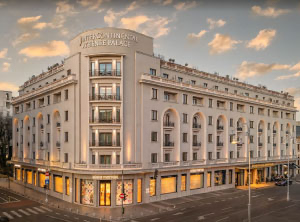
Public Transport Option: Express bus to city centre or train from airport to railway station followed by metro to destination.
Taxi at airport: At Henri Coandă Airport you can order a licensed taxi using the touchscreen terminals in the arrivals area; this issues an order ticket with a confirmed taxi and fare info.
We have arranged special rates. Booking link
Link: https://www.autonom-drive.ro/#/home/
Log in with this User name: booking@autonom.com
Select Parola: guest
Bolt: available through app
Uber: available through app
Black cab: Private transfer service available on their site https://black.cab/homepage-en/ or through app.
Find answers to common questions about our virtual event platform, registration process, Romania and more.
Please note that 112 (the European equivalent of 911) is the emergency telephone number that can be dialed free of charge from any telephone or any mobile phone in order to reach emergency services
(Ambulances, Fire & Rescue Service and the Police) in Romania as well as other countries of the European Union.
Rules for Access to the Premises of the National Bank of Romania
Persons from outside the institution accessing the premises of the National Bank of Romania (NBR) are required to:
The following are prohibited on NBR premises:
Yes, this event is completely free to attend but requires registration. Please fill in the registration form to gain access to details for the in-person event.
Yes, you’ll need to fill out our registration form to gain access to the event. Please fill in the registration form with some basic information to get started.
Yes, participation via Zoom is possible. Please register for online participation here.
The information you provide upon registration will only be used to establish you as a user on the platform and to create your login credentials. It will not be used for any other purposes.
Yes, this conference platform is compatible with any computer or mobile device and any browser.
National Bank Romania
Entrance Strada Doamnei number 8, Bucharest, Romania
Citizens from non-EU/EEA countries generally require a visa to enter Romania, which is now a Schengen member. Applications must be submitted through the e-Viza portal or at a Romanian diplomatic mission.
https://www.embassy-worldwide.com/country/romania/
Short-stay (C) and long-stay (D) visas require proof of funds (approx. €50–€100/day), travel insurance, and flight bookings
We will issue letters of invitation based on your application form information and uploaded passport.
Bucharest is served by two main airports: Henri Coandă International Airport (OTP), the primary international hub located in Otopeni, and Băneasa Aurel Vlaicu International Airport (BBU), used mostly for business aviation.
OTP is the busiest, handling most commercial traffic 16.5 km north of the city center.
Important Safety Tips:
Ignore "Solicitors": Upon exiting into the main hall, you will see people insistently offering "taxi or transportation." Do not accept these services. Go only to the counters with official logos.
Public Transport Option: Express bus to city centre or train from airport to railway station followed by metro to destination.
Taxi at airport: At Henri Coandă Airport you can order a licensed taxi using the touchscreen terminals in the arrivals area; this issues an order ticket with a confirmed taxi and fare info.
Bolt: available through app
Black cab: Private transfer service available on their site https://black.cab/homepage-en/ or through app
There are several railway stations in Bucharest: Gara de Nord (North Station, main access point), Basarab railway station, Bucharest Obor railway station, Băneasa railway station, Progresu railway station, and Titan Sud.
In Romania, the standard electricity supply is 230V at 50Hz, using Type C and Type F plugs (standard European two-round pin). Visitors from outside Europe, particularly North America, need a Type F plug adapter and likely a voltage converter. Most modern electronics (phones/laptops) handle 230V, but check labels.
There will be wifi access at the conference venue.
SIM card/Cell phone service
When travelling, you need to stay connected. Roaming charges can be expensive, and a local SIM card can save you. E-SIMs are to be loaded before you leave your country for activation on arrival. If you would prefer a pocket wifi or SIM, we recommend you hire/purchase from a cellular network store at the airport on arrival. Most will deliver to your hotel on pre-order.
November in Bucharest is cold, grey, and transitional, and decidedly wintery in feel.
Temperatures are cold, ranging between 0°C (32°F) and 10°C (50°F).

A showcase of stunning visuals in one place.

Tell your event story through images
Tell your event story through images
Tell your event story through images
Tell your event story through images
Tell your event story through images
Tell your event story through images
Tell your event story through images
Tell your event story through images